
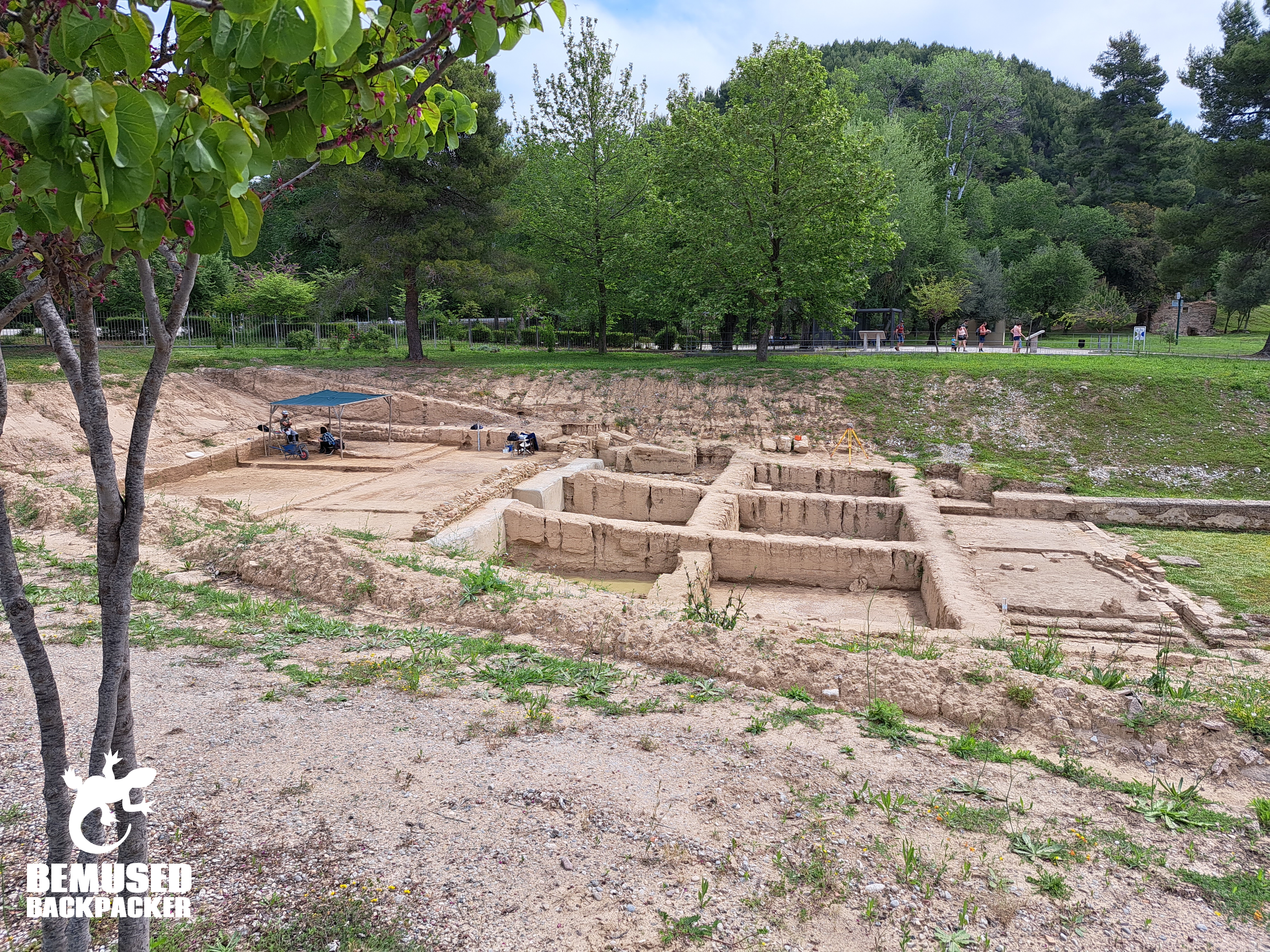
Take a walk through the valley of the gods in the Peloponnese region of Greece to discover the myth and history behind ancient Olympia, the birthplace of the modern Olympic Games. This article will inspire you to visit one of Greece’s most iconic cultural attractions, highlight the must see sights and give you all the essential information you need to know to visit Ancient Olympia.
This is a paid article written in partnership with Mythical Peloponnese, with products or services supplied by them. Full editorial integrity is maintained at all times. The views and opinions expressed are entirely the authors own based on personal experiences when travelling and are honest and factual without any bias.
Greece already has a pantheon of rich history and heritage sites to boast about, far more than can be packed in to just one single trip, but tucked away in the western Peloponnese in the valley of the gods is one of Greece’s most evocative ancient sites. Ancient Olympia, the birthplace of the modern Olympic games and former home to one of the lost wonders of the ancient world.
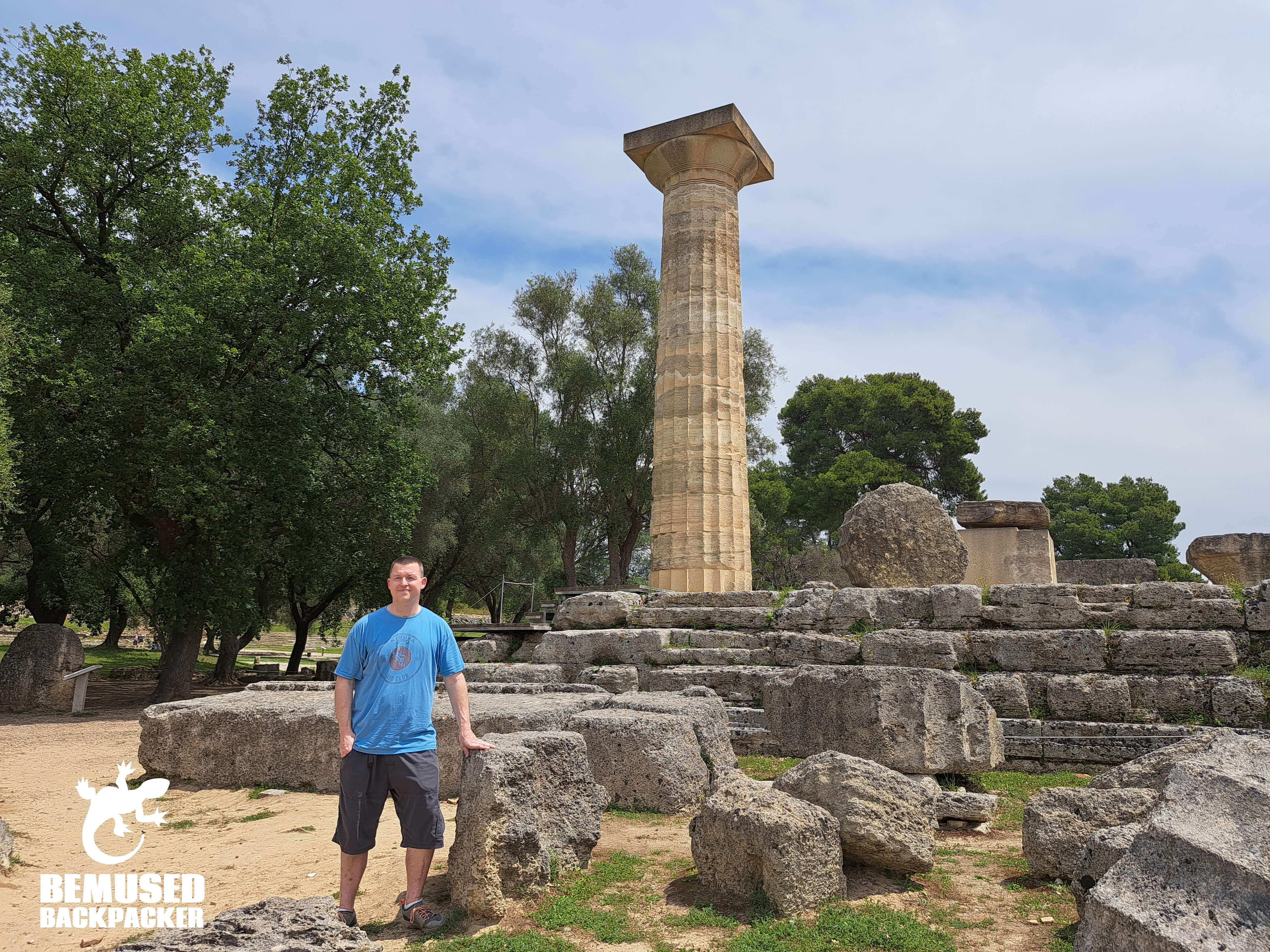
The archaeological site of Ancient Olympia, located just outside of the town of Olympia itself, is a popular day trip from Athens or Kalamata and more than earns is top spot as one of Greece’s most iconic cultural and historical attractions, worthy of far more time and interest than a simple day trip can allow.
Walking among the fallen columns, broken walls and ruined temples of one of Greece’s largest archaeological sites, it can be difficult to imagine the grandeur of the structures that once stood here. At first glance, and to an untrained or unimaginative eye, it is just a sprawling series of fields with a bunch of ruins and rocks strewn about. Not much is left of the grand stadiums, gymnasiums, statues or temples, and the magnificent gold and ivory statue of Zeus himself, one of the ancient wonders of the world, has long been lost to history. But what isn’t difficult to see for those who take the time to look a little deeper is what this site represents, what it used to be, the ghosts of the champions who fought and competed on this very soil, the power of Zeus and Hera themselves imbued in every rock face and ruined temple and the legacy this once great site has left behind! This was a place were men became gods, a place that inspired mortal men to achieve the highest physical, moral and spiritual ideals, a place that brought the ancient world together in the spirit of competition strong enough to end wars and forge long lasting peace, and more importantly, a place that has had an indelible impact on world culture ever since! A fact that has been recognised by UNESCO who honoured Olympia as a World Heritage Site for its sporting, cultural and religious importance as much as its historical legacy.
Travellers who want to walk in the footsteps of gods and legends are spoiled for choice in Greece, hiking through the island where Perseus returned with the head of Medusa and turned an entire kingdom to stone to save his mother, standing in the spot where Heracles performed one of his many labours, even climbing to the home of the gods themselves, all of these and more elevate a simple beach and island hopping getaway to something much more profound, giving a unique sense of privilege to simply be in the same vicinity. For a history and mythology fanatic like myself, there is truly no feeling quite like it. But here, at ancient Olympia, you are walking in the footsteps of men who became gods through sheer force of will and physical prowess, men who risked everything to achieve the ultimate accolade.
A trip to Ancient Olympia, one of Greece’s largest archaeological sites and popular tourist attractions is an absolute must on any visit.
The History Of Ancient Olympia.
Cycladic and Minoan Period.
Starting out as an important place of worship from the 9th Century BCE, the ancient site of Olympia consistently grew in size and importance as a religious and social complex, with people travelling from all over the known classical world to worship here and more and more temples and shrines built to honour the gods between 2000 to 1600 BCE. After that date the complex grew even further to include stadiums, gymnasiums and palaestra as the famous festivals to honour Zeus began to include increasing numbers of physical feats and celebrations of sporting prowess.
According to legend it was Zeus himself who held the first Olympic games to celebrate beating his father Kronos at wrestling, notably on the Hill of Kronos that overlooks Olympus. Other legends state that Hercules himself competed in the very first games, which basically consisted of the demi god beating every mortal challenger at wrestling! Actual records however show that the first official games held here took place in 776 BCE.
Archaic and Classical Period.
The games were held every four years from 776 BCE and became famous throughout the ancient world as a celebration of sporting, physical and moral prowess, and athletes who competed were expected to be of the finest moral and spiritual character as much as they were in peak physical condition. Being declared an Olympian was for the ancient Greeks as close to being a god that a mortal could get, chosen by Zeus himself and someone who could inspire a whole nation.
Representatives from every city state in Greece would gather in Olympia at the start of every Olympic games, having been drawn by the Olympian priests who would travel the length and breadth of Greece carrying an olive branch and a flaming lantern from the temple of Zeus to declare their peaceful intentions and ensure safe passage. Over time this symbol of peace became formalised with an official declaration of peace declared for the three months surrounding the games, wars were stopped and ceasefires called, and warriors met on the field of competition, not combat. The Olympic Games brought every city state together in a shared celebration, the start of a panhellenic commonwealth at a time when city states were warring with each other as much as outside forces.
The Heraean Games.
Although the Olympic games themselves were for men only, focusing on sports that mirrored skills useful in combat and warfare such as wrestling, and honoured Zeus as the father of the Greek pantheon, women were not excluded entirely. Following the first Olympic games in 776 BCE, women competed in their own events known as the Heraean Games, honouring Hera, as the wife of Zeus and queen of the gods.
Hellenistic and Roman Period.
The ancient Olympic games ran every four years until 393 AD, when the Roman Emperor Theodosius I waged war on Paganism and the old gods. Everything that was seen as heretical to Roman theology, and the rule of Rome itself, was to be destroyed and wiped off the face of the earth, and that included any celebration that honoured the Greek pantheon, including the Olympics. Every temple, every statue, every cultural and religious site was ransacked, razed to the ground and destroyed. Statues of the gods that were seen as to valuable to just destroy outright were recarved in his image, and as legend has it that is supposedly what happened to the great Statue of Zeus as well, although no one truly knows for sure.
Modern Period.
After a long period of inactivity, the modern Olympic games were started again in 1896 in Athens, and just like the ancient games, have been held every four years ever since. This is where a visit to ancient Olympia really comes into its own, being able to see and relate to exactly how our lives today have been influenced by the games and ceremonies performed here thousands of years ago. Everything the modern Olympics is today is thanks to what started here in Olympia, and there are still hints everywhere you look in the modern games. There may not be chariot races any more, and there have been a lot of questionable sports added since, but wrestling, the javelin and the discuss are still present just as they were in 776 BCE, the Olympic flame that now travels the world is still lit here and so many more symbolic gestures and traditions that all started in ancient Olympia are still honoured today. More than that though, just like in ancient Greece, modern Olympians are still celebrated as the pinnacle of human physical achievement and help bring the world together even if it is for a short time every four years.
What To See And Do In Ancient Olympia.
The archaeological zone of Ancient Olympia is huge with over 70 significant buildings, and you could easily spend days wondering around the ruins and still not discover everything! But here are just some of the must see highlights you can’t miss on your visit.
The Altis.
This is more of a general area to take in rather than a specific building but the Altis, the sanctuary to the gods, has been recognised by UNESCO as having one of the highest concentrations of masterpieces from the ancient Greek world, including the ruined Temple of Zeus, and has been a place of worship since the 9th Century BCE.
The Sanctuary And Temple Of Zeus.
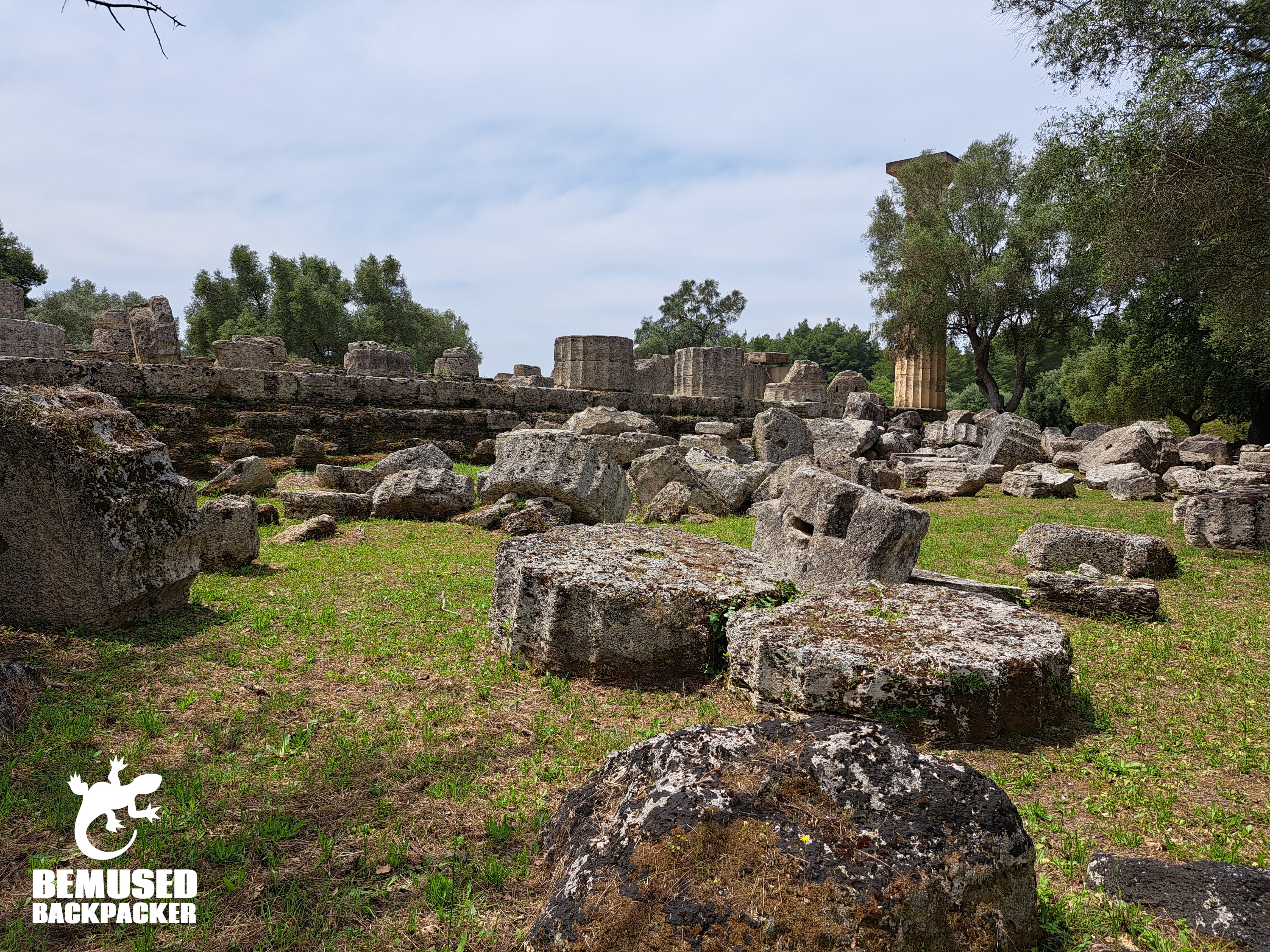
This was once the site of the great Statue of Zeus, one of the lost wonders of the ancient world, and just like standing at the Pyramids of Giza or the sites of the lost Lighthouse of Alexandria or Colossus of Rhodes, it is a genuine, awe inspiring thrill and privilege to even stand in the same spot and wander what it once would have been like.
The ‘world wonder’ accolade has lost a lot of its shine in recent years, now that every country claims to have at least a dozen of them across countless categories, but think about it, this was one of the original ancient wonders of the world!
Today only the foundations of the Temple of Zeus and a few ruined columns are visible, having been uncovered by archaeologists in the 19th Century. You do have to use your imagination to see it how it once would have been but there is one column that has been restored and helps put into perspective the sheer size of the structure that was once there.
The Altar Of Oaths.
Just outside the Temple of Zeus is the bouleuterion, an official chamber of sorts where competitors swore to abide by the rules of the Olympic Senate and more importantly commit to being the purest physical, moral and psychological examples of humanity. Olympians were supposed to be the best of the best, the closest any mortal could be to a god, and they were held to that standard. Athletes found cheating were publicly shamed and humiliated before paying a huge fine that would be used to build a statue of Zeus outside the stadium with their name, their fathers name and the name of their village carved into it to ensure their eternal shame and dishonour.
The Doric Temple Of Hera.
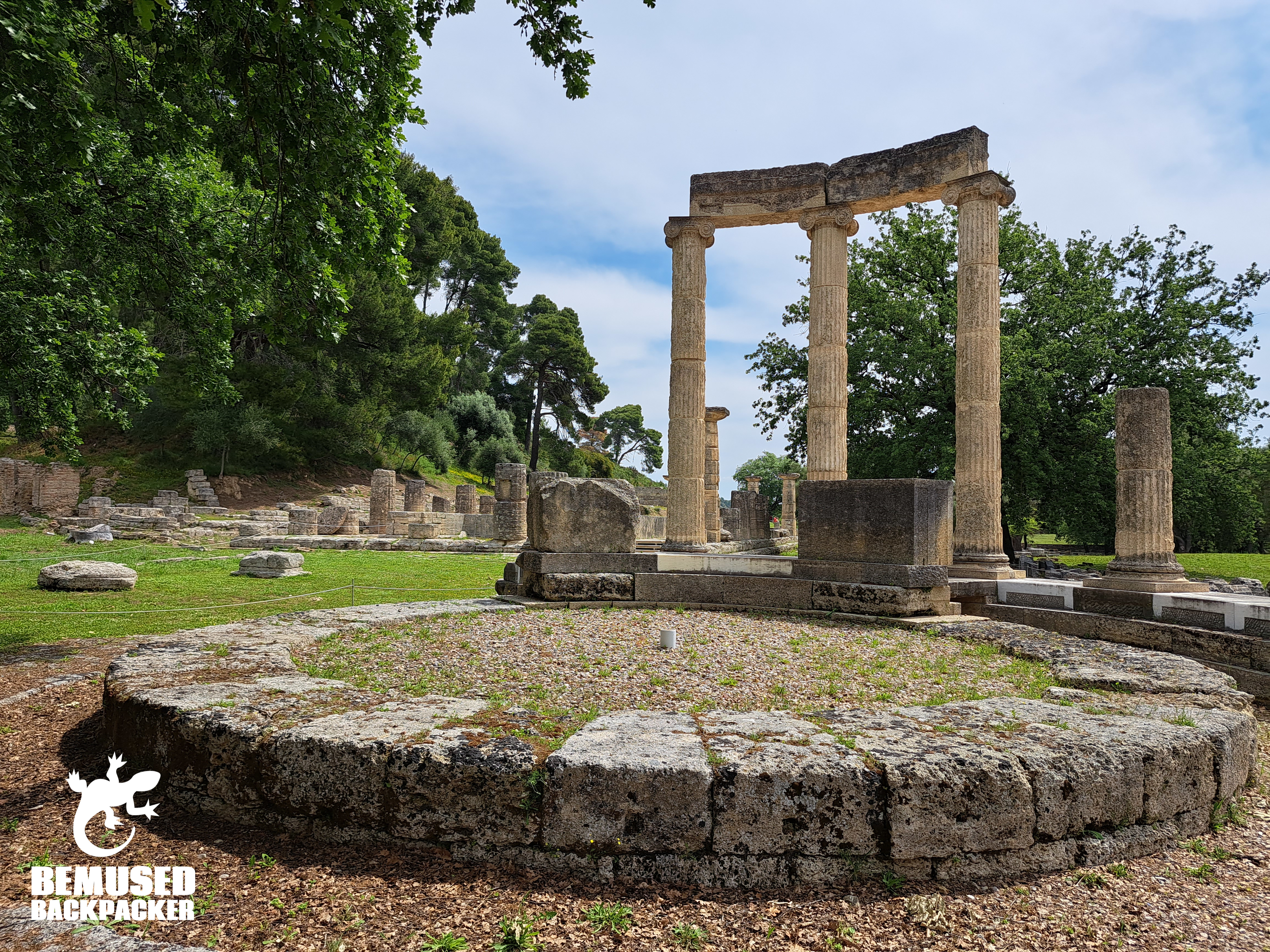
The Temple of the goddess Hera is the oldest temple in the Altis, significantly older than the Temple of Zeus, being built in 590 BCE, and was once one of the most significant places of worship in all of Greece, showcasing the original pagan worship of male and female deities on equal footing.
Hera’s Altar.
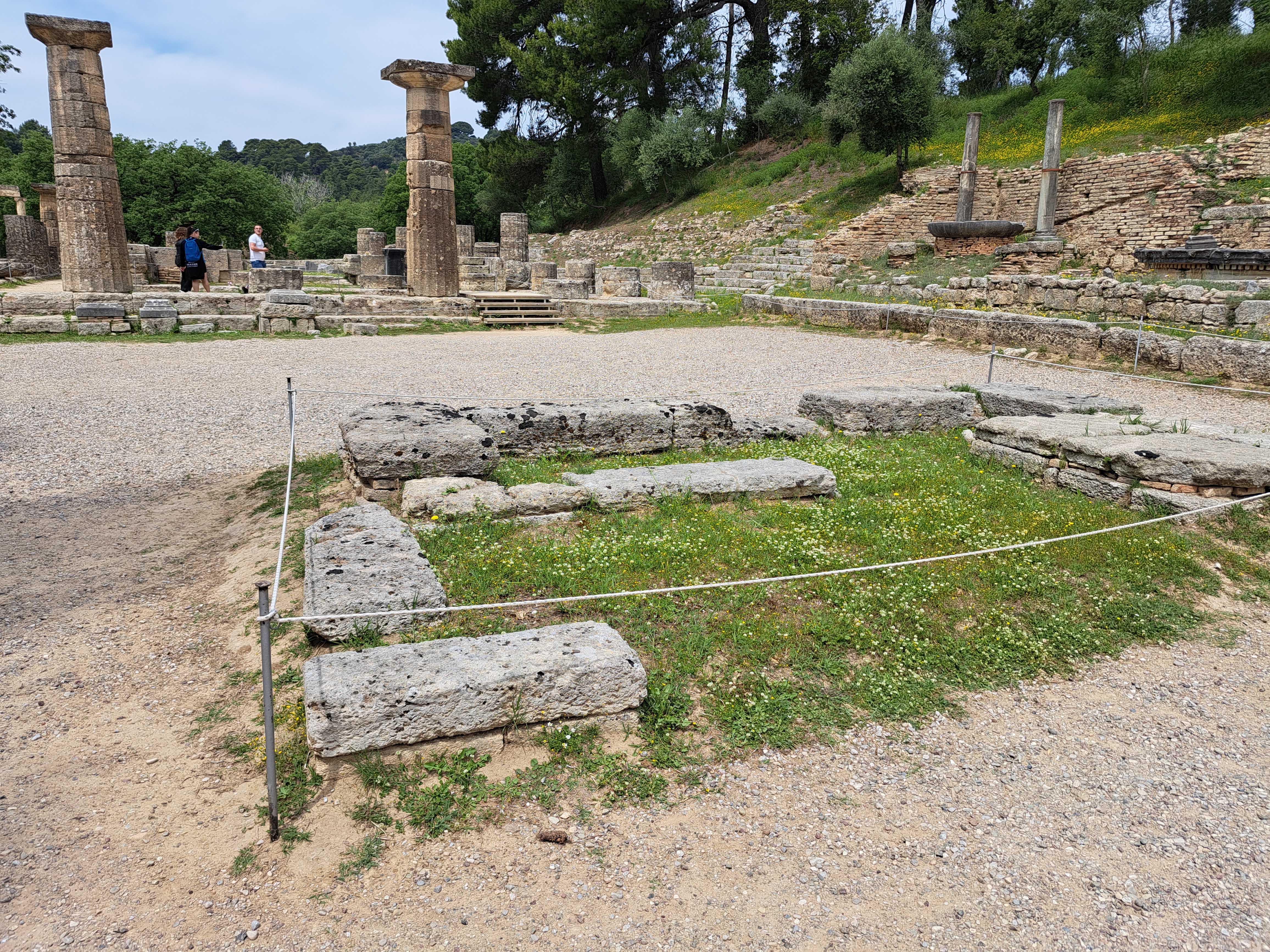
An altar in front of the temple held the continuously burning Olympic flame, which symbolised the fire stolen from the gods by Prometheus, and it is from this very same altar that the Olympic Torch is still lit today before it begins its journey around the world.
The Palaistra.
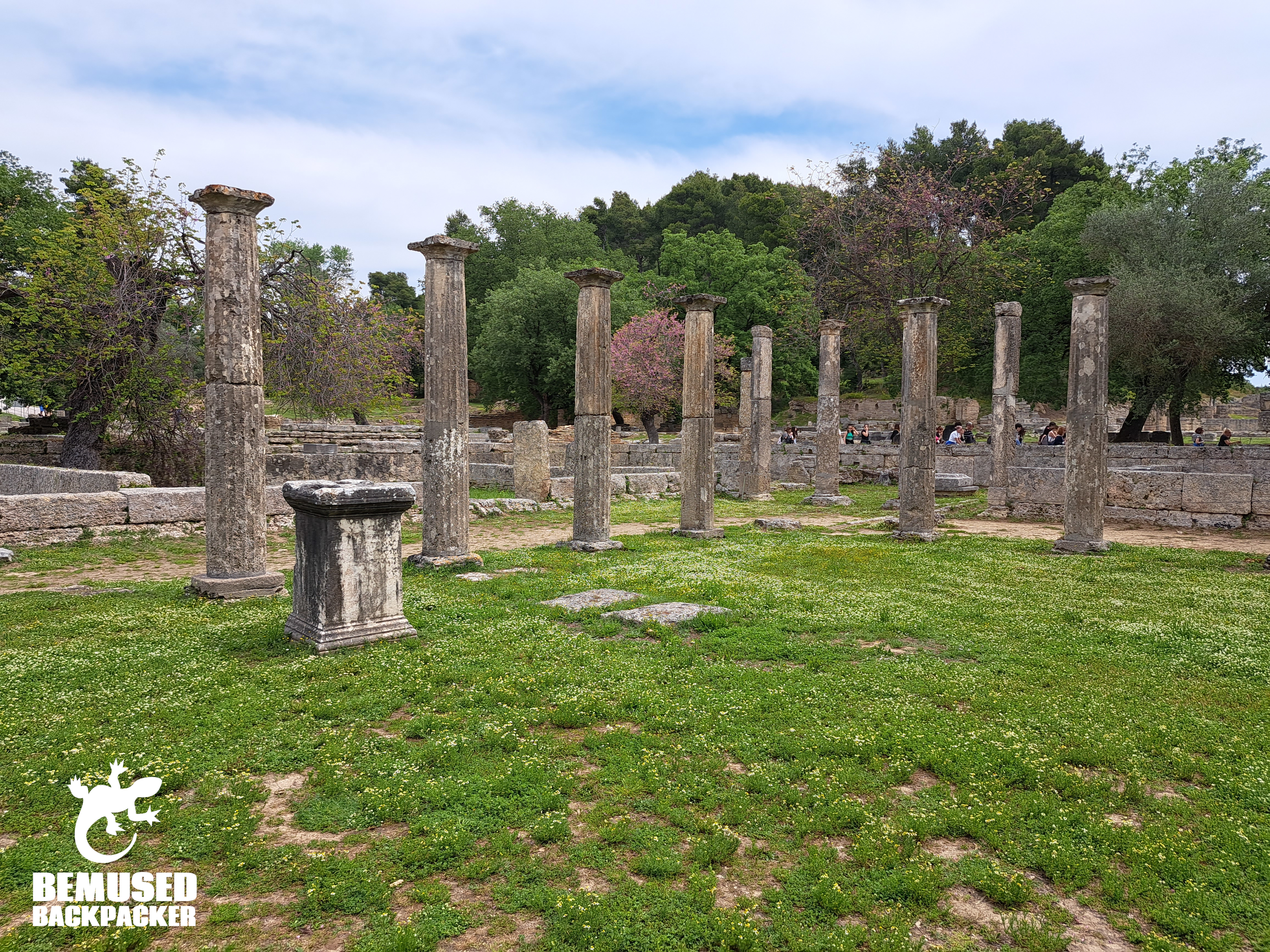
The Palaistra was the wrestling school, where all athletes competing in the wrestling games would be housed and train, and as a lifelong Judoka this area just instantly felt so familiar to me. The Doric columns surround a large sand pit which was basically the ancient Greek version of a mat. It wasn’t just wrestling that was taught here though, boxing was too, and an ancient Greek martial art known as Pankration, which could easily lay claim to being one of the earliest styles of mixed martial arts. It was brutal and bloody, and earned its literal translation of ‘anything goes’.
The Stadium.
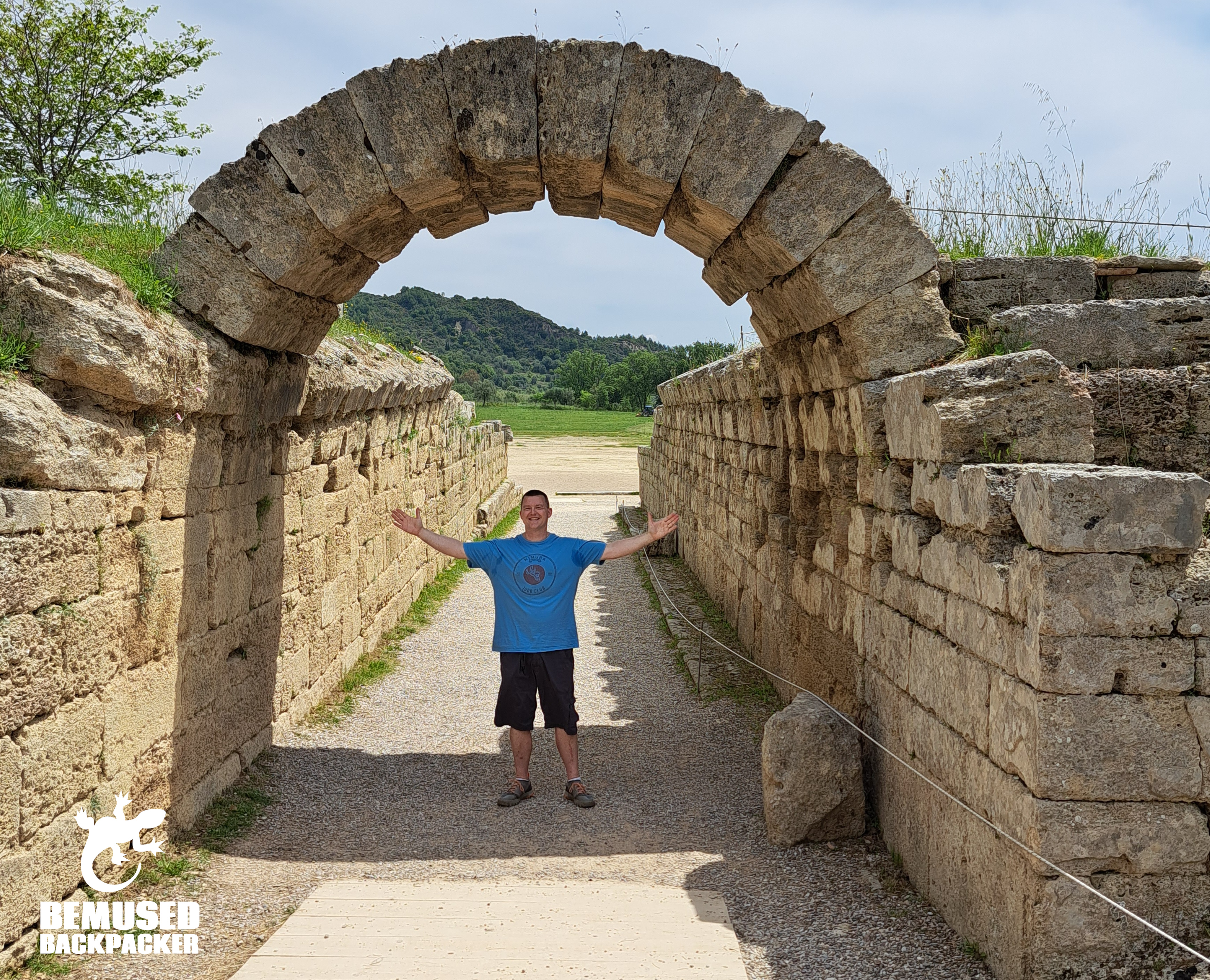
This is the spot everyone has to see during their visit. This was were the games themselves were once held, and at its peak could seat approximately 50,000 spectators, with many more being able to view the action from the Hill of Kronos that overlooks it. The large rectangular stadium still has the stone start and finish lines of the sprint track, as well as the judges seats, still in place.
The Starting Blocks.
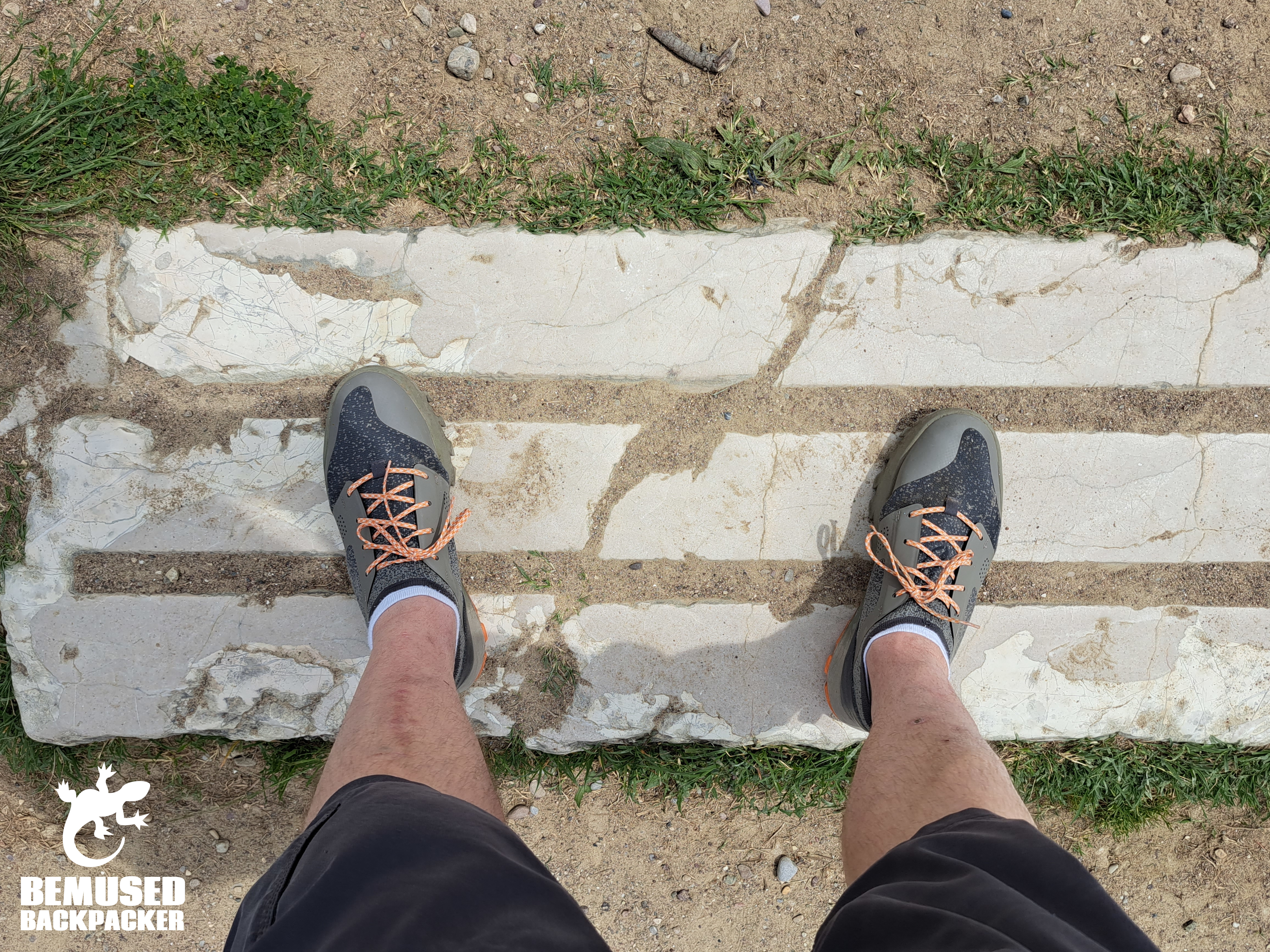
The original starting blocks from the very first games where Olympians would compete in various races (including in either full armour or completely naked) have been restored and are still in place just a short walk from the stadium entrance. Standing on that start line and seeing the flat track out in front of you will send a shiver down your spine.
The Archaeological Museum Of Olympia.
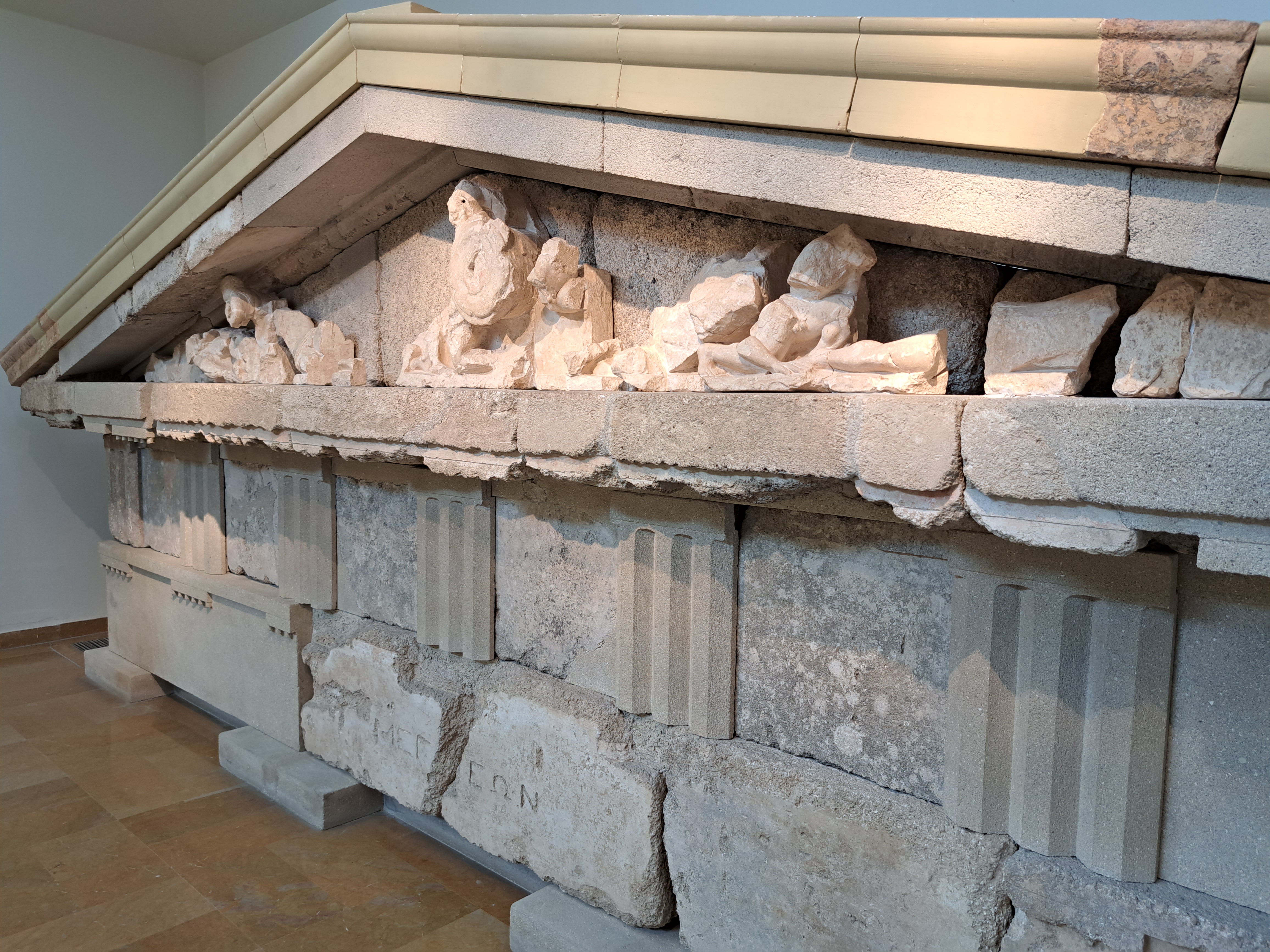
The Archaeological Museum of Olympia is one of the most important museums in Greece and is an absolute must see on any trip to Olympia. The oldest and largest of the three museums in the complex, it houses some of the worlds most important works of art, including many of the statues, reliefs and artefacts from the archaeological site of Ancient Olympia itself as well as what remains of the temple and sanctuary of Zeus.
The Museum Of The History Of The Olympic Games In Antiquity.
This smaller museum, once Olympia’s first Archaeological Museum completed after the first excavations in 1888, has now been converted to specialise in the history of the games themselves, telling the story of the ancient Olympians and the games at Olympia, as well as other Panhellenic games like the Pythian at Delphi, the Nemean at the sanctuary of Zeus at Nemea, and the Isthmian Games at the sanctuary of Poseidon near Corinth.
The Museum Of The History Of Excavations In Olympia.
This smaller museum tells the story of archaeology at Ancient Olympia, taking visitors through the scientific methods involved, the stories of the excavations themselves and has various displays of the tools and equipment used over the years.
Practical Information For Visiting Ancient Olympia.
How To Get To Ancient Olympia.
You absolutely can visit Ancient Olympia on a day trip, but the trip there and back will take most of the day no matter where you come from which means less time on the site, so I would seriously recommend staying in Olympia itself for a few days and making the most of your visit.
Olympia is just over a three and a half hour drive, away from Athens, about an hour and a half away from Patras and closer to two and a half from Kalamata.
From Athens you can get a long distance KTEL bus to Pyrgos town, which takes about 4 hours, and then take an onward local bus to Olympia which takes around half an hour.
From Katakolon, where most of the cruise ships dock and is probably the closest main hub for a day trip, you can take a shuttle bus from outside the port or a train, both of which take around 45 minutes.
Opening Times And Ticket Prices At Ancient Olympia.
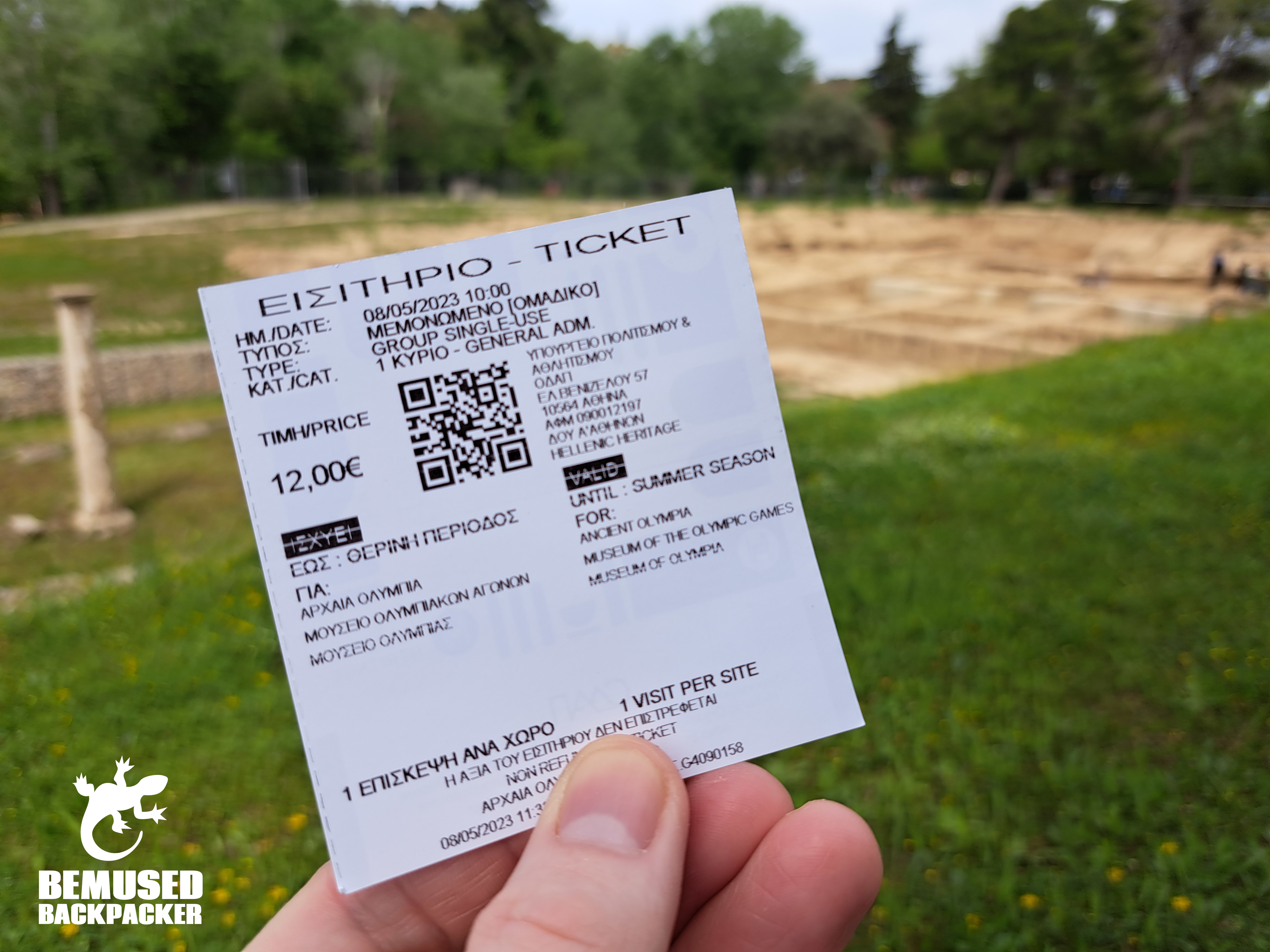
Check the official Ancient Olympia website for up to date changes, but entrance to Olympia costs €12 with concessions for the elderly and students, and includes the archaeological site, Archaeological Museum of Olympia, Museum of the History of the Olympic Games of Antiquity and Museum of the History of the Excavations in Olympia.
There are also various free admission days throughout the year, check the official website for latest details.
The site opens at 0800 hours and closes at 2000 hours in the summer and 1800 hours in the winter.
Visiting Ancient Olympia.
There are some basic information panels around the site, but if you want to get more of an insight when visiting Olympia it’s worth hiring a guide. You can pre-book a private guided tour with an archaeologist, which I absolutely recommend.
Ancient Olympia is an incredible site and an absolute must see for any trip to Greece! The birthplace of the Olympic games, a site that is intrinsically tied to the heart of Greek culture and history, a UNESCO World Heritage Site and the site of one of the lost wonders of the ancient world are simply iconic, and is deserving of far more than just a simple day trip.
Did you enjoy this article? I would love to hear your thoughts in the comments section below or on my Facebook or Twitter pages and please feel free to share it with any or all of the social media buttons. If you want to get more great backpacking tips, advice and inspiration, please subscribe to updates via email in the box to your right.
Related Articles.
Dos And Dont’s For Travelling In Greece: Customs And Etiquette For First Time Travellers.
Getting Lost In The Footsteps Of The Knights Of Rhodes.
Hiking The Mythical Polilimnio Waterfalls In Greece.
Is Kalamata In Greece Worth Visiting?
Walking Through The Petrified Forest Of Agios Nikolaos In Neapolis, Greece.
What Happens When A Backpacker Goes On An All Inclusive Holiday?

Michael Huxley is a published author, professional adventurer and founder of the travel website, Bemused Backpacker. He has spent the last twenty years travelling to over 100 countries on almost every continent, slowly building Bemused Backpacker into a successful business after leaving a former career in emergency nursing and travel medicine, and continues to travel the world on numerous adventures every year.






 Bemused Backpacker
I love the history of sites like this! It’s sad that so many don’t see the value of what a place used to be.
I know what you mean, it is such a strange and unique feeling when you can feel that resonance with a place.
I knew the Olympic games started in Greece obviously, but I had no idea that it was somewhere you could actually visit! That probably sounds really stupid in hindsight! Definitely want to add this to my list for my next trip!
Not at all Aleah, there was so much I didn’t know before I visited too! And it really is worth a trip all on its own merits!
What an amazing site, looking into going on my next trip to Greece
Awesome, have a great time!
Did you get a tour there? Is it worth it?
It’s definitely worth getting a tour if you don’t know much about the history, many are archaeologists who have an absolute wealth of knowledge.
I love archaeological sites like this. They don’t get as much attention as they deserve.
I agree Erin, they really don’t!
Greece is amazing for historical dates like this but I didn’t know about this one, and the Statue of zeus too?! Can you still see any of it?
You can see the ruins of the temple where it stood and there are some remnants in the museum, but most of it has been lost to time I’m afraid.
Did you enjoy Olympia? If you are ever back here I would love to show you around.
I loved it Anna and thank you very much!
How is the former site of an ancient wonder of the world not a much bigger tourist attraction? It looks a little bit forgotten.
Honestly I have no idea! It really is a mystery to me.
The fact we can just walk around ancient sites like this never fails to blow my mind!
Me too Rob, me too!