
Can self defence classes really make you safer on your gap year? Learn why lasting capability takes more than a few moves and a confidence boost.
Editor’s Note: This editorial draws on more than 25 years of independent travel, first-hand experience and publicly documented evidence and regulatory changes. Many of these editorials were written years before the issues became mainstream, and have been updated to reflect current developments while remaining true to their original arguments.
Should you learn self defence before your gap year? As someone who has spent most of his life studying martial arts, I think everyone can benefit from them from a physical, mental and even spiritual perspective, so I may be a little biased in my views toward them. Despite that, it may surprise you to hear that my answer is no, not always.
I absolutely love martial arts and the study of Bushido, and if you are genuinely thinking of taking up an art before your gap year, I would enthusiastically encourage you to do it. They have been a huge part of my life since childhood and have given me far more than the ability to throw a punch or execute a technique. But if you are asking whether a few self defence lessons shortly before departure will equip you to handle a violent confrontation, that is a very different question.
I started Goju Ryu Karate when I was around five or six. My dad taking me to those early classes is one of my formative memories, and fuelled by a constant diet of 80s martial arts movies and binge watching everything Chuck Norris, Van Damme and Dolph Lundgren ever did, I eventually added Ju Jitsu and Judo as I got older, long before MMA claimed to invent cross training!
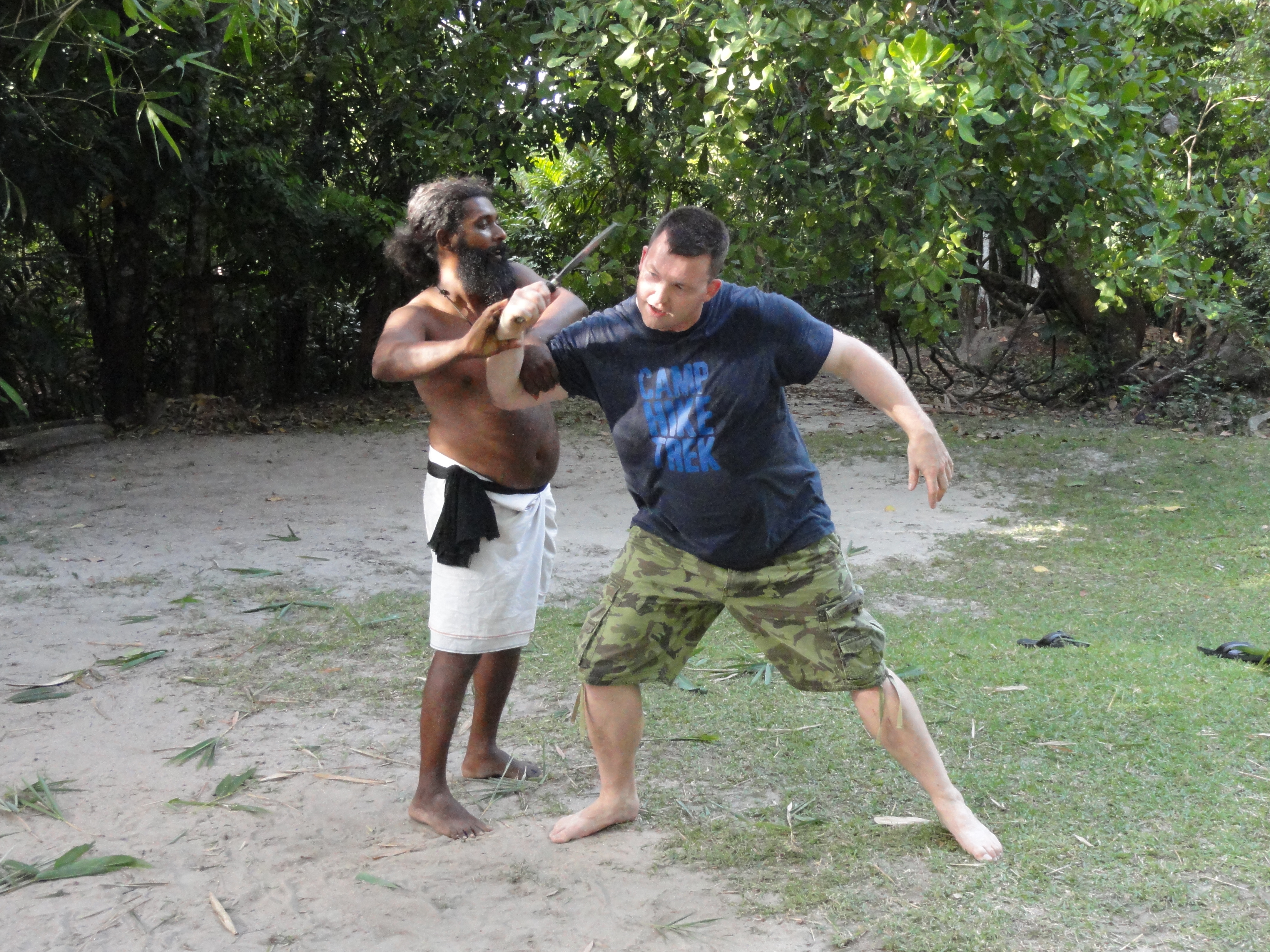
I even let this passion bleed through into my love for travel. Almost everywhere I went I took some time to learn from different instructors and experience martial arts within the cultures they came from. Training became part of the adventure itself, opening doors to people and experiences I might otherwise have missed. I practised fencing in France, studied Wu Shu in China and stayed at a Muay Thai camp in Chiang Mai, among others. Sometimes I took whatever opportunities came my way; other times I travelled to a country specifically to train. Practising randori at the Kodokan in Japan is one of my fondest, and at the same time one of my most painful, memories!
Over the years I have also studied a range of weapons arts, including Sai Jutsu, Iaido and Kendo. I have been a student and teacher of many arts as well as self defence and unarmed combat in military and civilian settings, so as you can imagine, this background has given me a lot more than just the ability to fight and defend myself. Martial arts have challenged me, developed my discipline and self confidence, and taught me to recognise my limitations as well as my strengths. That confidence has helped me travel independently, but it has never meant believing I could win every fight or that knowing how to defend myself made sensible precautions unnecessary.
Knowing how to defend yourself is an important skill to have, but there is so much more to staying safe when you travel. Travel safety mostly comes down to understanding the risks, being prepared for them, developing good situational awareness and making good decisions before a situation becomes dangerous. Physical self defence is simply another layer of preparation on top of that if those precautions fail, and it should always be the last one.
This is why I argue that although everyone can benefit from learning a true martial art, you need to understand what you are signing up for and what you can realistically expect to gain from it. There is a huge range of training available, from one-off self defence classes at a local gym or community centre to structured courses and traditional, family-run dojos or schools where students spend years developing their skills. Some offer far more depth and better instruction than others, and they do not all prepare you for the same things.
Training can be valuable, depending on how it is taught and how much time you devote to it. But learning a few moves and developing the ability to use them when frightened, under pressure and facing someone who refuses to cooperate are very different things. Before signing up for self defence lessons ahead of your travels, you need to understand that difference.
Why A Few Self Defence Lessons Are Not Enough
If you are worried about protecting yourself on your gap year, booking a self defence class can feel like an obvious solution. An instructor shows you what to do, you successfully repeat it and you leave feeling more prepared. That can be a good start, but too many people take one or two classes and then think they have ticked a box. This isn’t how it works. Performing a technique in a lesson and being able to use it during a violent confrontation are very different things, and a brief class can leave you confident without giving you much reason to be.
We have all seen the type of class I’m talking about here: the ‘women’s self defence and empowerment seminar’ at the local community centre, because they are so often aimed at women, or the ‘learn self defence’ class at the gym that apparently promises mastery of unarmed combat in an afternoon.
They will be filled by women drunk on the feminist propaganda, eager to learn how to ‘beat aggressive men’ and pound guys bigger than them, or others declaring they just want to kick arse, and will almost inevitably be taught by someone who thinks Tackleberry from Police Academy was a role model.
Okay, I’m being a little facetious, but there are good reasons why I wouldn’t recommend these as a way to learn self defence before your gap year. Chief of which is that they just don’t work as a substitute for sustained training. You cannot demonstrate a few techniques, let people try them twice and reasonably expect them to be equipped to handle a violent confrontation.
They give you a handful of demonstrations, show you a few techniques and let you rehearse them once or twice with a cooperative partner. There is little or no context and no continuing practice afterwards.
The techniques themselves are often fine, usually taken from a specific martial art or adapted from several. But you lose the context, setup, timing and strategic awareness developed through the rest of the training. You may know how to perform an isolated technique, but until you have practised it against resistance and under pressure, you have not established that you can use it when needed. This isn’t one of those 80s martial arts films where 15 Ninja’s stand in a circle and wait their turn to attack Jackie Chan. Your attacker is not going to stand there obligingly while you remember where your hands are supposed to go.
Take a simple wrist release. Your partner grips you exactly as instructed, stands still and lets you complete the movement. You manage it, perhaps repeat it on the other side, and move on. But what happens when someone grips harder, pulls you off balance, changes position or refuses to let you finish? What do you do when your first attempt fails?
Without realistic resistance and controlled, dynamic practice, including sparring where appropriate, you have little opportunity to answer those questions. Martial arts need muscle memory as much as they do knowledge and understanding, and techniques need to be adapted to what is happening to you at the time.
And what happens in six months’ time when you find yourself in trouble and need that technique? Are you going to remember it under pressure? These are perishable skills too. Even experienced practitioners become rusty; rehearsing something twice and never returning to it gives you very little reason to expect it will be there when needed.
I’ve seen this first-hand, which is why I stopped teaching management of violence and aggression training in the NHS. I was heavily critical of the fact that it wasn’t taught regularly or thoroughly enough. In what used to be called breakaway training, nurses were shown a prescribed technique during a mandatory session, perhaps once every three years at best, and then expected to apply it in an emergency. It wasn’t enough. It didn’t prepare people properly and gave a dangerously false sense of security just so management could tick a box.
Fear and adrenaline make this harder still. When someone attacks you, you cannot assume you will react the way you imagined. You may shake, struggle to think clearly or freeze entirely, and a technique that seemed straightforward in class can suddenly become difficult to recall or execute. This is precisely why proper training involves repetition and progressive, controlled stress testing. You need to develop familiar responses and practise using them while under pressure, making decisions and adapting when things go wrong. Hoping you will somehow manage all of that because you attended a class six months ago is no substitute.
Don’t get me wrong, I have seen the confidence boost people get after even a couple of classes. If that helps someone overcome an exaggerated fear of travel and finally take their gap year, that can be an amazing thing. If it encourages them to start training regularly, even better. But one ‘mandatory lesson’ before departure will not turn you into an instant black belt, however encouraging the instructor was.
The danger comes when that confidence exceeds your capability. It can encourage you to stay in a confrontation you should be leaving or attempt something you do not have the skills to carry through. If these are the classes you are considering a month before your gap year, researching your destinations and taking sensible safety precautions deserve far more of your attention. Take an introductory lesson if it interests you, but recognise how much learning and practice still lie ahead.
Some Short Courses Offer More Than A Few Techniques
There are, however, a few short courses that take a more substantial approach than demonstrating a handful of moves and sending everyone home. I’m still critical of those basic sessions, and rightly so, no one has yet persuaded me otherwise, but there are courses out there that teach a broader set of skills and have more realistic aims deserve to be distinguished from them.
A structured course can help you recognise threatening behaviour, assess what is happening and act before a situation escalates. It can give you opportunities to practise setting boundaries, responding verbally, identifying ways to leave and using physical resistance where necessary. That is considerably more useful than learning an isolated wrist release without understanding when you might need it or what to do afterwards. This approach fits the established personal safety principles of recognising risk early, avoiding unnecessary confrontation and de-escalating where possible. It starts developing your judgement before an attack happens, giving you more opportunities to get away without needing to fight.
There are courses that combine situational awareness, verbal assertiveness and setting boundaries with physical defence skills, as well as broader personal safety training covering risk assessment, responding to aggression and de-escalation. The difficulty is knowing where to find them. Depending on where you live, these options may be less readily available—or simply less visible—than the one-off classes advertised at your local gym. Some are promoted primarily through workplaces or educational settings, so someone preparing for a gap year may not even know to look for them. But their broader approach is worth seeking out: they start with recognising and managing a situation before it reaches the point where someone grabs you.
There is practical value in learning to recognise when someone is ignoring your boundaries, understanding that you do not have to remain polite while they do it and rehearsing ways to respond. A course that helps you act earlier may give you useful options long before physical fighting skills become relevant. Confidence built through that process has more substance than reassurance that you can now handle any attacker.
These courses offer more, but when it comes to physical self defence they eventually hit the same brick wall as the more basic classes: you still need to practise. Better awareness and the confidence to speak up or leave are valuable skills, but they do not make a briefly rehearsed technique reliable under pressure. If you want to develop that physical capability, you still have to put in the time, train against resistance and keep your skills fresh. A broader course gives you a better starting point; it does not finish the job.
If you are considering a short course before travelling, look closely at what it actually offers. Does it teach recognition, judgement and escape alongside physical responses? Do you get meaningful opportunities to practise? Is the instructor honest about the limits of the training and clear about how you can continue learning?
A well-structured course can be a useful part of your preparation and a good route into further study. Just understand which skills it is helping you develop, and how much work remains if you want to become physically capable of defending yourself under pressure.
What Long-Term Martial Arts Training Can Give You
The best thing these smaller classes can offer is that sometimes they encourage people to learn more and carry on their training in a full martial arts system, and that is a genuinely wonderful thing. I really can’t recommend doing this enough. Not only will you be adding a genuinely useful string to your bow and adding an extra layer of protection for yourself if the worst happens, you’ll find that you also gain a lot of self confidence, self discipline and trust in your own abilities to handle most things. And this time, you’ll actually have the skills to back that up!
If you genuinely want to learn how to defend yourself, find a good school or club, start at the bottom and train regularly. Give yourself time to learn the art properly, understand what you are doing and develop the skills through practice. That commitment can give you far more than a handful of techniques to remember before your gap year.
For me, martial arts have been an enormous part of my life There is something deeply satisfying about struggling with a skill, putting in the work and eventually finding you can do something that once seemed impossible. You also get used to making mistakes, being corrected and discovering that someone you underestimated can still put you firmly on your backside. That sounds harsh, but it help keeps the ego in check too!
Over time, your confidence has something substantial behind it. You have a clearer understanding of your strengths, your limitations and how you respond when challenged. That can be hugely valuable when travelling independently, whether you are dealing with an unfamiliar situation, asserting yourself or deciding that something is beyond your capabilities and walking away.
Find The Right Art And The Right Instructor
When people think of martial arts they usually think of the big three Japanese arts; Karate, Judo or Ju Jitsu, or more lately MMA and the UFC, which honestly saddens me a little. But there are hundreds out there you can choose from. Escrima, Taekwondo, boxing, Krav Maga, Wing Chun, Tai Chi (and yes, Tai Chi done properly is a martial art too), are all there for you to choose from.
Which martial art suits you will depend on your interests, physical capabilities, sometimes what is available in your area, and what you want from the training. Some people love striking arts, others prefer grappling, and some enjoy combining them. Some people may have a body type suited to Judo, others to Xingyiquan. The traditions and philosophy may be a major attraction, or you may be drawn to competition and the physical challenge. There is no real rule to choosing one and no right or wrong answer. Find something you enjoy enough to keep turning up for, because consistency requires more than enthusiasm during your first week.
You also need to be careful about the instructor and make sure you choose a good one, because there are a lot of McDojos out there that put everyone through a paid grading every month so they can guarantee a black belt within a year. An instructor’s collection of belts, certificates or photographs looking menacing aren’t a sign of anything, just look at the Cobra Kai dojo entrance in the first Karate Kid. Take some time, watch how they teach, how they treat beginners and whether students can ask questions without being treated as though they have insulted someone’s ancestors.
A good instructor should explain limitations honestly, help you progress safely and give you opportunities to practise against increasing resistance as your skills develop. If practical self defence is one of your goals, ask how the training addresses it. Be wary of anyone promising that their system makes size irrelevant, works against every attack or will make you invincible. An instructor who can tell you when something might fail is better than one who gives you false confidence.
Practise For The Situation You Want To Handle
If your goal is physical self defence, you need to practise applying your skills in conditions relevant to that goal. Years of training can develop considerable ability, but there are many paths to the same destination. If all you do for years is kihon, or basic fundamental techniques with a cooperative partner, that may give you muscle memory, but it won’t stress test your techniques.
Proper randori, kumite and sporting competition can both contribute to that development. Competition in particular gives you experience of timing, distance, resisting opponents and making decisions under pressure. Those are valuable skills for self defence. But competition takes place within an agreed set of rules and conditions, and applying those skills outside that setting requires further practice against resistance that reflects the situations you want to handle.
That means opportunities to deal with unfamiliar attacks, difficult starting positions and attempts that fail. Can you adapt when your preferred technique does not work? Can you recover when you lose your balance or someone closes the distance unexpectedly? Can you recognise an opportunity to leave while you are occupied with protecting yourself? Your training should help you explore those questions through controlled resistance, dynamic practice and progressive pressure testing.
The challenge needs to increase as your ability develops. An instructor overwhelming a beginner proves very little and teaches even less. Good practice gives you enough resistance to expose weaknesses, enough control to learn from them and opportunities to try again under increasingly demanding conditions. It cannot guarantee how you will respond to an assault, but it gives you a firmer basis for confidence than assuming a rehearsed movement will work when you need it.
So Should You Learn Self Defence Before Your Gap Year?
If you want to take up a martial art, then yes, absolutely! Find an art that interests you, a good instructor and a school where you can learn properly. Start at the bottom, train consistently and give yourself time to develop. You may find, as I did, that something you began partly to learn how to defend yourself becomes a lifelong passion, with benefits far beyond anything you originally expected.
But if you are hoping a couple of classes shortly before departure will equip you to handle a violent confrontation, my answer remains no. Enjoy them as an introduction, or look for a structured course that develops your awareness and judgement, but be honest about what you have learned and what still needs work. Feeling more confident is welcome; knowing the limits of that confidence is essential.
You do not need a black belt to take a gap year, and you certainly do not need to postpone travelling until you have one. Most of staying safe comes down to preparation, awareness and sensible decisions. Martial arts can add valuable physical skills and the confidence to use them if necessary, but they should support that wider approach to safety.
I would enthusiastically encourage anyone interested in martial arts to give them a go. They have given me discipline, self esteem and the confidence to travel independently and on my own terms, as well as some extraordinary experiences along the way. Just do it properly. Your gap year deserves more preparation than a wrist release you vaguely remember from an afternoon at the gym.
If you want to learn how to defend yourself do it properly and train long term, choose a martial art that suits you and stick with it. You’ll find – as I did – that it will not only give you the tools to defend yourself if needed, but also an innate self confidence, philosophy and personal self esteem that will give you the courage, determination and fearless tenacity to travel anywhere in the world independently and on your own terms.

Michael Huxley
Michael Huxley is the founder of Bemused Backpacker, a travel writer, published author, international speaker and former nurse who has spent more than twenty-five years travelling independently through over 150 countries. He helps readers travel with more confidence, safety and perspective.
Travel Safety
Learn how to stay safe when you travel with practical, reassuring advice that helps you prepare well, avoid common risks and explore the world with confidence rather than fear.

Smart Travel Safety Basics Every Traveller Should Know
Travel safety is about preparation, awareness and good judgement. These simple but essential travel safety basics will help you minimise risk, avoid common problems and travel with greater confidence anywhere in the world.

Solo Female Traveller Safety Tips
Learn how to put the risks of solo female travel into perspective, take sensible precautions and travel the world safely without letting fear hold you back.

Solo Male Traveller Safety Tips
Learn how to understand the risks solo male travellers face, avoid common mistakes and use simple, practical habits to stay safe on the road.

How To Avoid Trouble On Your Gap Year
Most travel problems can be avoided long before they happen. Smart decision making, situational awareness and knowing what to avoid and how go a long way towards staying safe, confident and independent while travelling the world.

How Not To Get Murdered, Killed Or Kidnapped On Your Gap Year
Practical, no-nonsense advice to help you recognise genuine risks, avoid dangerous situations and stay safe on your gap year without letting fear ruin the experience.

How To Lose Weight, Get Fit And Travel The World At The Same Time!
Discover how to make exercise, healthy eating and adventure part of your travels, helping you lose weight and get fitter while exploring the world.

Quick And Easy Tips On How To Exercise On Your Gap Year
Keep fit on your gap year with simple, practical ways to exercise wherever you travel, from bodyweight workouts and adventure activities to hiking, swimming and local classes.

How To Stay Fit And Healthy On Your Gap Year
Build a healthy routine on your gap year with practical advice on eating well and balancing strength, cardio and flexibility while travelling the world.

12 responses to “Should You Learn Self Defence Before Your Gap Year?”
I was genuinely thinking of taking up a few classes for this exact reason. My local gym has a kickboxing class and before I go on my gap year I wanted to learn a few moves in case I needed to defend myself. Do you really not think it is worth it?
Learning any martial art is always a good thing, but if you really want to get to the point where you are able to use that knowledge effectively in a life or death situation then a few classes won’t cut it, you have to train consistently. By all means start the class, but keep it going over the long term (and even continue to train when you travel) 🙂
I totally agree, for any training to be effective and useful, it has to be done repetitively over a long period of time. You definitely can’t just take a class or two and expect to be able to handle yourself.
Exactly my point. 🙂
Very interesting article, I have honestly thought about taking up a few classes and this has given me a lot of food for thought, thank you.
You are more than welcome, I’m glad you found it useful and hope it has persuaded you to take up an actual martial art long term if that is what you want to do?
You are awesome! I knew you looked as if you could handle yourself but I had no idea you were such a badass!
Haha, I wouldn’t exactly consider myself a badasss but thank you. 🙂
This has genuinely got me thinking about doing some training myself, properly of course!
That’s awesome Marie, any idea what you want to try?
I 100% agree with this article! As a long-term martial artist (10 years down and a lifetime left to go), it is plain to see how important martial arts are for not only your physical safety but for all the other virtues and skills that it teaches you along the way. I am always a supporter of people starting to learn martial arts, but it is something that you need to stick with or it won’t stick with you. Props to you for an excellent and honest article!
Exactly, I think self defence is so important but it can also be a case of a tiny bit of knowledge can be dangerous if all people take is one or two classes, and thank you I’m glad you enjoyed it!