
Should you travel to dangerous countries? Learn how to separate exaggerated reputations from genuine threats and decide when the risk is acceptable, and when it isn’t.
The world is full of countries that seem off limits to any ordinary traveller. Tales of war, terrorism, political unrest, violent crime and natural disasters dominate the headlines until entire nations appear to be little more than enormous danger zones best viewed from behind the safety of a television screen.
But a terrorist bombing in one city, unrest along one border or a war breaking out decades ago does not automatically make a country dangerous, despite media narratives or its reputation. Risk is rarely spread evenly across an entire nation, and it does not remain frozen in time. Situations improve, governments change, conflicts end and destinations that were once genuinely unsafe can become perfectly reasonable places to visit, yet the label often remains long after the reality has moved on.
After more than 25 years of travelling through over 150 countries, including many routinely described as some of the most dangerous places in the world, I have seen how enormous the gap between reputation and reality can be. Places portrayed as terrifying have often been filled with ordinary people living ordinary lives, while supposedly safe destinations have still presented risks that required awareness and good judgement.
That does not mean every warning is exaggerated or that genuine danger should ever be ignored. There are countries, regions and situations where the risk is unacceptably high and the only sensible decision is not to go. But dismissing an entire destination because of a dramatic headline, an isolated incident or a reputation it acquired years ago is not sensible risk assessment either.
The real question is not whether a country has ever been called dangerous. It is whether the places you intend to visit are genuinely dangerous now, whether the risks are relevant to you and whether those risks can be reduced to an acceptable level.
Should You Travel To Dangerous Countries? Quick Answer
You should not travel anywhere where the current risk is genuinely unacceptable to you. Active conflict zones and places where natural disaster have just hit are one thing, but many countries labelled ‘dangerous’ are nothing of the sort. Their reputation may be based on an isolated incident, a conflict that ended years ago or trouble confined to one small region. Look beyond the label, assess the places you actually intend to visit and make your decision using current evidence rather than headlines, hearsay or fear.
The Reality Of Travelling To ‘Dangerous’ Countries
Over more than 25 years of travelling, I have spent time in Afghanistan, Iraq, Sudan, Mali, Myanmar, Israel, Gaza, Ukraine and the Democratic Republic of Congo, all at different points in the past and under very different circumstances. I was in Egypt during the Arab Spring, encountered armed militia in the Congo and narrowly missed natural disasters in Thailand and Mexico. Read as a single list without any context, it sounds less like a travel history and more like an increasingly desperate attempt to give my mum a nervous breakdown.
I have also nearly drowned in Thailand twice, had a knife pulled on me during an attempted mugging in Colombia and a cat even saved my life in Cairo once!
Am I mad for doing all of this? Do I have some sort of deranged death wish? My mum certainly thinks so sometimes, as do most strangers I meet who hear of where I have been without knowing me or how or why I travel.
You would think that all of this would scare me off travel for life, but you’d be dead wrong. In fact it has only ever encouraged me to travel more. Those incidents were serious, but they were isolated events rather than the defining reality of the countries where they happened. They could have happened in countless destinations, including many that nobody would think twice about calling safe. I dealt with them, learnt from them and carried on travelling.
And guess what? I’m still alive.
That is not because I am fearless, reckless or possessed of some extraordinary ability to stroll unharmed through active conflict zones. It is because I research destinations carefully, distinguish a country’s reputation from the conditions that actually exist and do not travel when I believe the danger is unacceptable to me at that time.
Because of that, and despite a few isolated incidents, in over 25 years of world travel I have never once felt really unsafe anywhere.
That may sound contradictory after reading the list above, but it is the entire point. I did not experience those countries as a montage of their worst headlines or isolated incidents. I experienced real places at specific moments in time, often far away from the incident, region or historical event responsible for their dangerous reputation. When individual situations did arise, I recognised them for what they were, responded to them and removed myself from the immediate threat before carrying on with my travels.
Some of those destinations are places I would not return to under present conditions. I would not travel to any active conflict zone for example, for obvious reasons, but that does not mean I would never return if circumstances changed. A journey that was reasonable at one point can become unacceptable later, just as somewhere genuinely dangerous today may become perfectly safe to visit in the future.
This is why the ‘dangerous’ label is so often misleading.
Travel safety is not a collection of permanent recommendations. There is no such thing as a ‘safe’ or a ‘dangerous’ country. Risk assessments are always fluid, and there is often a vast difference between the public perception of how dangerous a place is, and how dangerous it actually is. Perception versus reality. Many destinations don’t deserve their ‘dangerous’ reputations long term, and yet at the same time visiting a ‘safe’ country does not justify travelling there during a war, humanitarian crisis or rapidly deteriorating security situation.
Questioning a lazy or outdated reputation is not the same as ignoring a genuine current threat. Travelling into an active conflict zone simply to prove that you are brave is not adventurous or impressive; it is reckless. Danger is not an achievement, and unsafe destinations are not trophies to collect.
I travel regularly to countries perceived as dangerous, but I do not have a death wish. I research the reality, assess the risks as they exist at that time and make my own informed decision. I simply refuse to let an exaggerated, outdated or geographically meaningless reputation make that decision for me.
You see, I never actually travel anywhere that I myself would consider genuinely dangerous.
Perception Versus Reality
A country’s reputation is rarely built from a balanced picture of what life there is actually like. It is shaped by the events dramatic enough to dominate international rolling news: a terrorist attack, violent protest, military coup, natural disaster or particularly horrific crime. These events may be real and serious, but relentless repetition can make one incident feel constant, one location feel nationwide and a temporary period of instability feel like the permanent state of an entire country.
The news does not show the millions of people going to work, taking their children to school, meeting friends, opening businesses and getting on with their lives because ordinary life is not newsworthy. Nor does it report on every traveller who visits ancient temples, crosses the country by train, eats in local restaurants and returns home perfectly safely. The exceptional event becomes the whole story while everything continuing normally around it remains largely invisible.
That distorted picture often strips away any sense of geography. Violence along one remote border can condemn a country thousands of miles across. Unrest in one district can make every city appear unstable. An attack at a single resort can create the impression that tourists are being hunted across the entire nation. Few people would hear about an incident in London and conclude that Edinburgh, Paris and Rome were all too dangerous to visit, yet equally sweeping judgements are routinely made about countries elsewhere in the world.
Those impressions can survive long after the situation that created them has changed. Governments fall, conflicts end, security improves and ordinary tourism returns, but reputations are much harder to shift. People remember the coup, bombing or civil unrest that dominated the headlines years ago; they rarely hear as much about the long, quiet period of recovery that followed.
This is how a serious but isolated event becomes a permanent national identity. It is also why simply asking whether a country is dangerous tells you very little. You need to know what is happening, where it is happening, who is being affected and whether it represents an isolated incident or part of a continuing pattern. Most importantly, you need to know whether conditions are stable, improving or deteriorating now.
None of this diminishes the original event or suggests that localised danger can simply be ignored. It places that danger in the context needed to make a rational decision. A destination should be judged by the conditions that exist where you intend to go and at the time you intend to go, not by the worst thing that has ever happened there.
When The Reality On The Ground Tells A Different Story
The version of a destination presented through headlines and warnings can bear little resemblance to what travellers actually find when they arrive. Dramatic events are amplified until they appear to define an entire country, even long after they have ended, yet daily life still carries on.
The 2015 Sousse shootings, in which 38 tourists were murdered, were a horrific atrocity. But I saw no reason to cancel my plans to visit Tunisia a month later because of one isolated attack, despite intense media scaremongering portraying the entire country as a no-go zone.
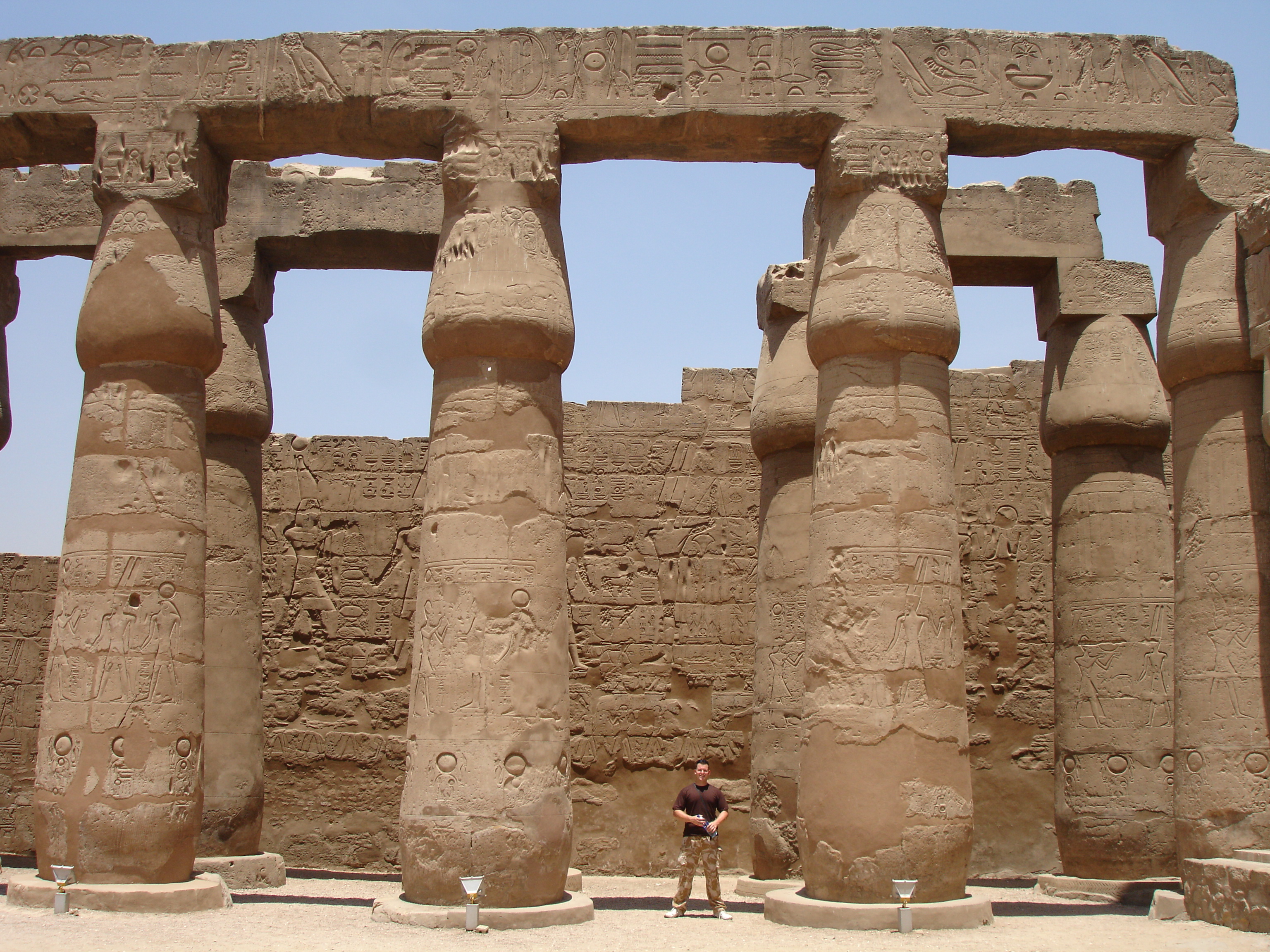
Some of my favourite destinations have carried dangerous or unsafe reputations for decades. I have a lifelong passion for ancient history and Egyptology and have spent a lot of time travelling through Egypt over the years, including during periods when political unrest, terrorism and sweeping travel warnings caused much of the outside world to treat the entire country as one enormous conflict zone.
I was in Cairo at the beginning of the Arab Spring, sitting in a café sipping strong shai and reading international news coverage making it appear as though the whole city was engulfed in chaos. Friends and family were contacting me to ask if I was safe while, beyond the areas being shown repeatedly on television, much of Cairo was carrying on around me. The unrest was real, and the specific places where demonstrations were taking place demanded serious caution, but the image of an entire city collapsing bore little resemblance to what I could see from the café.
The same pattern has repeated itself whenever an attack, protest or security incident has occurred in Egypt. A serious event in Cairo, the Sinai Peninsula or a single resort has repeatedly damaged the reputation of the entire country, including destinations hundreds of miles away where the immediate risk was completely different. These warnings were not merely cautious words on a government website. Travelling against them could invalidate ordinary insurance, tour operators withdrew holidays and airlines stopped flying, turning a geographically limited threat into a nationwide collapse in tourism.
After the bombing of Metrojet Flight 9268 in 2015, the UK suspended direct flights to the resort for four years after, even as security was strengthened and flights resumed from other countries. Egyptian officials and tourism representatives repeatedly challenged the continuing restrictions for years before the UK government finally lifted them in October 2019. By then, a warning about one airport had spent years reinforcing the far broader and deeply misleading impression that Egypt itself was simply too dangerous to visit.
There were times when the resulting collapse in visitor numbers meant I was the only Westerner exploring an ancient site. From a purely selfish perspective, having some of the world’s greatest historical monuments almost entirely to myself was extraordinary. But it was also a stark reminder of how quickly fear can empty a destination and devastate the guides, drivers, guesthouse owners, restaurant staff and countless others whose livelihoods depend on tourism.
That does not mean every part of Egypt has always been safe or that genuine warnings should be dismissed. There have been times and places where avoiding demonstrations, changing routes or postponing travel was the only sensible decision. The mistake was assuming that danger in one location automatically described the reality everywhere else.
Across all my years of travelling through Egypt and the Sinai, including several extended visits, I have never felt unsafe, never encountered any serious trouble, well, apart from that one time that cat saved my life, and experienced nothing but warmth, hospitality and some of the most extraordinary moments of my travels.
Egypt was never simply ‘dangerous’. The reality depended on where I was going, what was happening there and when I intended to travel. The same is true of almost every country burdened with a dangerous reputation.
Use Government Travel Advice As A Starting Point
Official travel advice belongs in any serious assessment of a destination, but it cannot make the decision for you. It can provide vital information about active conflict, political instability, terrorism, arbitrary detention, border closures, natural disasters and disruption that may not be obvious when planning from home. It can also change the practical reality of a journey, because travelling against official advice may invalidate your insurance, restrict the help available from consular services and leave you with very few options if the situation deteriorates.
The problem is that advice written for an entire country and every conceivable type of traveller cannot reflect the precise circumstances of one individual journey. It may describe a serious threat in one province, along a remote border or at a particular airport while the rest of the country continues normally. Yet the most severe warning is often stripped of that context, repeated across the media and remembered as a judgement on the whole destination.
Read the full advice rather than stopping at the warning banner. Establish exactly where the danger exists, what type of threat it presents, who is most likely to be affected and whether it has any relevance to your route or plans. Check how recently the information was updated and whether the situation appears stable, improving or deteriorating. A warning about an overland border crossing could be decisive if you intend to use it and almost irrelevant if you will be travelling hundreds of miles away.
Build out that picture using current local and international reporting, specialist security information, reliable local contacts and recent accounts from travellers who have actually been there. First-hand experience should never override credible evidence—a traveller saying everything felt fine tells you only what that individual encountered—but it can help reveal whether daily life on the ground reflects the broad impression created by an official warning.
The consequences of ignoring that warning must still be taken seriously. Confirm that your insurance will remain valid, commercial transport is operating normally, borders are likely to remain open, adequate medical care is available and meaningful consular assistance could reach you. A place can appear perfectly calm while still leaving you dangerously exposed if something goes wrong.
This is not about searching until you find someone willing to tell you what you want to hear. It is about comparing credible information, understanding precisely what each warning means and placing it in the context of your actual journey.
You have to develop a keen sense of what travel safety advice deserves weight, what needs further context and what can safely be ignored.
When You Should Not Travel
Questioning an exaggerated reputation does not create an obligation to go. Sometimes the evidence is clear, the danger is genuine and the only sensible decision is to postpone the journey. Travel is not an endurance test, and reaching somewhere against all reasonable advice proves nothing except that you were willing to accept consequences you may not be able to control.
Active conflict along your intended route, a credible risk of kidnapping or arbitrary detention, rapidly escalating civil unrest, collapsing healthcare, repeated attacks against foreigners or borders and airports beginning to close are not vague questions of perception. Any one of these can be immediate threats that can remove your ability to avoid danger, obtain help or leave when conditions deteriorate.
A destination can also become practically unmanageable before it becomes immediately life-threatening. If commercial transport is being withdrawn, communications are failing, cash is becoming inaccessible or medical facilities are overwhelmed, a relatively small problem can quickly become a serious emergency. The question is not simply whether you can enter the country; it is whether you can travel through it safely, deal with foreseeable problems and get out again if your plans fall apart.
Insurance and outside assistance matter as well. If travelling against official advice leaves you uninsured, consular support is severely limited and evacuation would be impossible or unaffordable, you are accepting far more than the immediate risk of an incident. You are accepting the possibility that no meaningful safety net will exist afterwards.
Do not rely on the fact that local people are still living there as proof that it is safe for you to visit. Residents may have no option to leave, and they usually have language skills, family networks, local knowledge and access to resources that a newly arrived traveller does not. Their ability to continue living through a crisis says very little about your ability to navigate it safely.
Plans, bookings and excitement can make people search for reasons to continue long after the evidence says they should stop. None of those things matters more than your safety. If the threat is specific, current and relevant to where you intend to go, and you cannot reduce it to a level you are genuinely prepared to accept, change the route or postpone the trip.
Postponing does not mean surrendering to fear, and it does not mean the destination is lost forever. It means recognising that the same country may be a completely different proposition in six months, a year or five years. The world will still be there when the conditions are right.
Look Beyond The ‘Dangerous’ Label
So should you travel to dangerous countries? If a destination presents a genuine and unacceptable threat at the time you intend to visit, no. Change your route, postpone the journey and return when the situation improves.
But do not confuse a genuinely dangerous situation with a dangerous reputation. Entire countries are routinely judged by their worst headline, one troubled region or an event that happened years ago. Accepting that label without examining the reality can close off extraordinary destinations, cultures and experiences that were never beyond reach in the first place.
Research what is happening now, where it is happening and whether it is relevant to your journey. Understand the practical consequences, decide what level of risk remains after reasonable precautions and be willing to walk away when the evidence demands it. Then apply the same honesty in the other direction: if the threat is exaggerated, outdated or nowhere near where you intend to go, do not let somebody else’s fear make the decision for you.
Travelling beyond the destinations everyone already considers safe can reveal just how welcoming, complex and completely ordinary the wider world really is. It replaces distant assumptions with lived experience and reminds you that countries are more than their conflicts, crises and worst moments.
Look beyond the label. Judge the reality. Make an informed decision.
Be Prepared, Not Scared.

Michael Huxley
Michael Huxley is the founder of Bemused Backpacker, a travel writer, published author, international speaker and former nurse who has spent more than twenty-five years travelling independently through over 150 countries. He helps readers travel with more confidence, safety and perspective.
Travel Safety
Learn how to stay safe when you travel with practical, reassuring advice that helps you prepare well, avoid common risks and explore the world with confidence rather than fear.

Smart Travel Safety Basics Every Traveller Should Know
Travel safety is about preparation, awareness and good judgement. These simple but essential travel safety basics will help you minimise risk, avoid common problems and travel with greater confidence anywhere in the world.

What To Do When Something Goes Wrong While Travelling
Learn what to do when something goes wrong while travelling, from reaching safety and getting help to restoring your essential options, dealing with the aftermath and deciding what happens next.

Common Travel Scams
Learn how to recognise the most common travel scams, spot the warning signs and avoid the tricks and situations that catch travellers out.

Solo Female Traveller Safety Tips
Learn how to put the risks of solo female travel into perspective, take sensible precautions and travel the world safely without letting fear hold you back.

Solo Female Travel: Don’t Let Fear Stop You Exploring The World
Solo female travel is overwhelmingly safe, despite the widespread perception that women shouldn’t travel alone. Discover what the evidence actually says, overcome unnecessary fear and build the confidence to explore the world on your own terms.

Solo Male Traveller Safety Tips
Learn how to understand the risks solo male travellers face, avoid common mistakes and use simple, practical habits to stay safe on the road.

Is Backpacking Around The World Safe?
Is The World Really That Dangerous? This is a realistic look at travel risk, backpacking safety and why most journeys are far safer — and far more manageable — than many people fear.

The Reality Of Fear And The Truth About Travel Safety
Media narratives, cultural assumptions and fear of the unknown often portrays the world is more dangerous than it really is. Understanding the difference between perceived risk and real risk is one of the most important parts of travelling safely.

We Need To Change How We Think About Travel Safety
Travel safety is not about paranoia or avoiding the world. Learn how realistic preparation and informed decisions help you travel more confidently and independently.

Travel Safety Advice. The Good, The Bad And The Downright Crazy
Not all travel safety advice deserves to be taken seriously. Learn how to separate sensible, practical preparation from fearmongering, myths and the kind of overblown warnings that make the world seem far scarier than it really is.

Expert Travel Tips For Staying Safe During Civil Or Political Unrest
Civil or political unrest can happen anywhere in the world at any time, but staying calm, informed and adaptable will help you navigate uncertainty safely and confidently while travelling.

Global Events And Travel Safety
From political unrest to the rare threat of terrorism, after more than two decades exploring some of the world’s most misunderstood destinations, I’ve learned that smart travellers stay informed, adaptable and prepared without letting fear define how they see the world.

If You Stop Travelling, The Terrorists Win
Terror attacks by definition are meant to instill fear and change your way of life. That is why I will never allow terrorism to stop me from travelling the world and why I will never allow the terrorists to win.

20 responses to “Should You Travel To ‘Dangerous’ Countries?”
This is such an interesting way to look at it and it has really made me think. Thank you.
I’m really glad, thank you for reading.
This is a brilliant post! I absolutely agree that there is so much fear about travel based on nothing more than rumour or outdated advice. Backpackers need to look beyond all of that.
They really do Allen, as does everyone!
There are definitely countries that are dangerous and risky to go to but I definitely agree the media completely overblow things and create a mass panic about certain destinations, Egypt is a huge case in point.
I agree, Egypt’s reputation for being unsafe is completely unwarranted.
Brilliant article, it is so hard to determine what is real and what is overblown with 24/7 media.
It really is. There is so much speculation and outright dishonesty it can barely be called news any more.
I don’t know, you cant just say ignore official advice, they must know a lot more than they let on to warn against travel to a country.
I’m not saying Ignore it Theo, I’m saying don’t listen blindly to it. Official advice is notorious for being overblown, especially from the UK and US, and it is useful as a starting point to do your own research. Ask why they are saying a place is unsafe, ask if it is an isolated incident or a pattern, ask if it is the whole country or just a tiny portion of it which can be avoided, even ask if the information is out of date (which it often is).
So happy to read an article full of common sense on this issue. There is so much scaremongering out there!
There really is. Thank you.
Amazing way of looking at things an this is such great advice for all travellers. Stay prepared not scared! I am really loving your site!
Thanks so much I really appreciate it. 🙂
Totally agree! Too many people are far too afraid without any reason to be. Its all about perspective.
It really can be Paul. Thanks for the comment.
Such great advice! Love that you bring rational, reasonable thought to the safety debate. There is too much frightened scaremongering out there.
There definitely is.
Live free or die. I often thought of this New Hampshire license plate moto. I believe that you live by this moto, whether you know it or not. You can take all the precautions you want, but eventually the odds will get you.
I do travel, mostly to Cuba which is a very safe place for Canadians to travel. I do like going off the beaten trail while I’m there, but I’m not naive enough to know that I could meet up with the wrong person or persons on their turf. I would never think of going to countries where there are armies of people who would like to kill me because of the color of my skin or what religion I might not believe in.
I think you should count your lucky stars before you end up in the news as a person most people would say,” why would that idiot go there”. Anyways, I know you won’t.
Cats, I will talk about them as well. I’ve always had a couple of cats as pets. I live in the country so our cats were outdoor/ indoor cats. I know for a fact that the cats that went outside lived a much more fulfilling life, but normally a short one. The indoor cats live a very long boring life. So I guess we make our choices about how long we will live based on the amount of risk we put ourselves in. I wish you luck in your life.
Thanks for the sentiment Rick. 🙂