
Gal Oya National Park: A Wildlife Tourism Case Study
An actionable case study to identify what works, what can be improved and what lessons wildlife operators can apply to strengthen welfare, conservation and responsible visitor management at their facility.
About This Wildlife Tourism Case Study
This case study examines a real-world wildlife tourism experience through the lens of animal welfare, conservation and responsible tourism. Using recognised best-practice principles, it assesses how effectively the experience balances visitor expectations with the needs of wildlife, identifies strengths and areas for improvement, and highlights lessons that travellers, operators and the wider tourism industry can learn from.
The Attraction
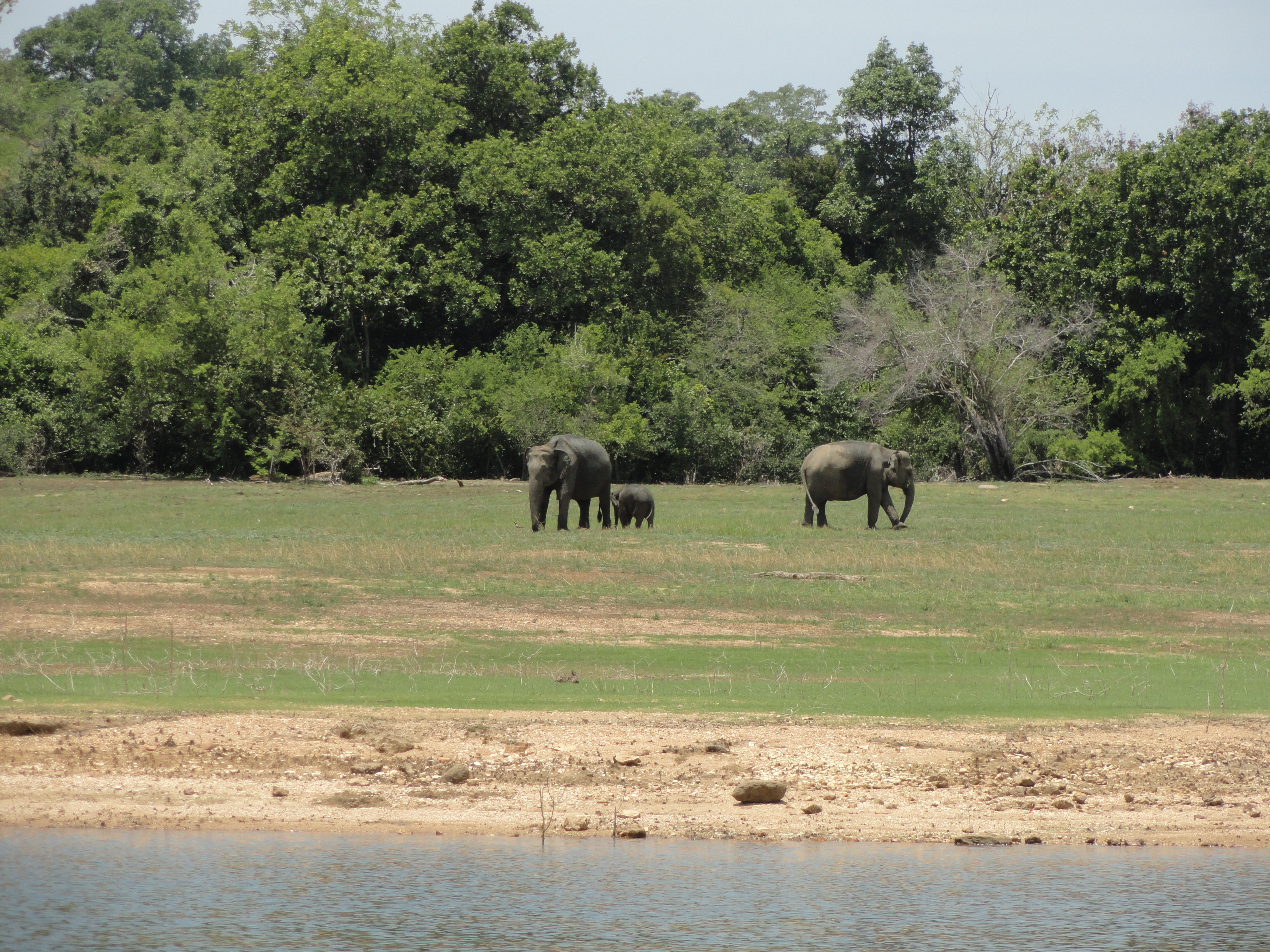
Gal Oya National Park is located in eastern Sri Lanka and is known for its relatively low-impact wildlife experiences, particularly boat safaris on Senanayake Samudraya, where visitors may observe wild elephants swimming between islands or moving along the water’s edge. Unlike more crowded safari destinations in Sri Lanka, Gal Oya has traditionally offered a quieter, more nature-led experience, where sightings are not guaranteed and the emphasis is on patience, landscape and observation rather than chasing animals for close encounters.
For elephant tourism, this distinction matters. Gal Oya offers the possibility of seeing wild Asian elephants in their natural habitat without requiring them to carry tourists, perform behaviours, tolerate touching or participate in any form of staged interaction. That places it much closer to the ethical end of the elephant tourism spectrum, provided the experience is managed responsibly.
The Ethical Tourism Standard
The benchmark for responsible elephant tourism should always begin with welfare. ABTA’s animal welfare guidance states that responsible elephant experiences should focus on viewing elephants from a respectful distance, giving them as much access to their natural habitat as possible and ensuring they are not subjected to cruelty, punishment or forced interaction. ABTA also separates responsible wildlife viewing from unacceptable practices such as elephant riding, direct-contact bathing or other activities that place tourist interaction above animal welfare.
The Five Freedoms of Animal Welfare also provide a useful framework. Any wildlife tourism experience should consider whether animals are free from hunger and thirst, discomfort, pain or disease, fear and distress, and whether they have the freedom to express natural behaviour. In a wild elephant safari context, the most relevant principles are minimal disturbance, freedom from fear and distress, and the ability of elephants to continue natural behaviours without being crowded, chased or forced to alter their movement because of tourism.
The Experience
Gal Oya’s strength as a wildlife tourism experience lies in its restraint. The experience is not built around guaranteed sightings or a promise of close contact. Visitors are taken into the elephants’ environment, but the elephants remain in control of the encounter. They may appear, or they may not. They may stay at a distance, move away, feed, swim, socialise or ignore the boats entirely.
That is exactly what responsible wildlife viewing should feel like. The best wildlife encounters are not always the most dramatic or photographically perfect. They are often the ones where the animal’s behaviour remains largely unaffected by your presence.
In the original Sri Lanka article, Gal Oya was presented as the positive side of elephant tourism: a place where elephants could be observed with far less pressure, crowding and intrusion than in more heavily touristed parks. That makes it a useful case study because it demonstrates that responsible wildlife tourism does not need to be passive or boring. It can still be memorable, emotional and powerful precisely because the animals are allowed to behave naturally.
Assessment Against Ethical Tourism Principles
Animal Welfare
From a welfare perspective, Gal Oya performs strongly because the experience is based on observation rather than control. There is no riding, no performance, no touching, no feeding and no requirement for elephants to engage with tourists. This aligns closely with modern elephant welfare principles, which increasingly prioritise autonomy, natural behaviour and minimal human interference.
Conservation Impact
Gal Oya also supports the broader conservation argument for responsible wildlife tourism. Wild elephants need protected habitat, and protected habitat needs funding, political support and local value. Tourism can help provide that value when it is managed carefully and when the experience does not undermine the very wildlife it depends upon. The IUCN Asian Elephant Specialist Group identifies habitat protection, habitat connectivity and human-elephant conflict management as major conservation priorities for Asian elephants, and responsible protected-area tourism can contribute to that wider conservation context.
Visitor Management
The lower-volume nature of the experience is one of its greatest strengths. Responsible elephant viewing depends heavily on visitor management: limiting disturbance, avoiding crowding, maintaining respectful distance and not pressuring guides to deliver artificial encounters. Gal Oya’s quieter model demonstrates how smaller-scale wildlife tourism can protect the integrity of the experience while reducing pressure on the animals.
Education And Interpretation
This is an area where Gal Oya has strong potential. A responsible elephant experience should do more than show visitors wildlife; it should help them understand elephant behaviour, habitat pressures, conservation challenges and the importance of ethical wildlife viewing. The more guides can interpret elephant behaviour and explain why distance matters, the stronger the experience becomes as an educational model.
Community And Economic Benefit
Gal Oya’s model also has value because it can support local livelihoods without relying on exploitative wildlife interaction. Responsible wildlife tourism works best when local communities benefit from protecting wildlife rather than competing with it. This matters in Sri Lanka, where human-elephant conflict remains a major conservation issue and where coexistence depends on making elephants valuable alive, wild and protected.
Key Strengths
Gal Oya’s greatest strength is that the experience is built around the needs of the wildlife rather than the expectations of the visitor. At no point does the tourism model depend on elephants interacting with tourists, approaching vehicles or altering their behaviour to create a memorable experience. Instead, visitors enter the elephants’ environment as observers, accepting that sightings occur on the animals’ terms rather than their own.
This may sound like a subtle distinction, but it reflects one of the most important principles in responsible wildlife tourism. Organisations such as ABTA, the Global Sustainable Tourism Council and numerous conservation bodies consistently emphasise that wildlife experiences should minimise disturbance and allow animals to express natural behaviours. Gal Oya’s approach aligns closely with these principles because the focus remains on observation rather than interaction.
A second strength is the quality of visitor management. Unlike many heavily visited wildlife destinations, the experience at Gal Oya felt deliberately restrained. Visitor numbers were relatively low, there was little sense of competition between guides and there appeared to be no pressure to deliver close encounters simply to satisfy tourist expectations. This created a calmer environment for both visitors and wildlife and reduced the likelihood of elephants being crowded, followed or repeatedly approached.
The experience also demonstrated a strong understanding of what makes wildlife encounters meaningful. Too often, tourism operators assume visitors want proximity above all else. In reality, many of the most memorable wildlife experiences come from witnessing authentic behaviour rather than engineered encounters. Watching elephants move naturally through their environment, interact with one another, forage, swim or simply go about their daily lives creates a deeper connection to the animals than any staged interaction could achieve.
From a welfare perspective, Gal Oya performs particularly well against the principles underpinning the Five Freedoms framework. The elephants are able to express natural behaviours, maintain social structures, move freely throughout their habitat and remain largely free from tourism-related interference. While no tourism activity is entirely without impact, the level of disturbance appeared significantly lower than that observed in many other elephant tourism settings, including some wildlife safaris.
The experience also illustrates the value of shifting the focus of wildlife tourism away from entertainment and towards interpretation. Rather than asking what tourists can do with elephants, Gal Oya implicitly asks what tourists can learn from them. This educational approach creates a stronger conservation message and encourages visitors to view elephants as wild animals deserving of respect rather than attractions designed for human enjoyment.
Perhaps most importantly, Gal Oya demonstrates that responsible wildlife tourism can also be commercially viable. One of the most common arguments used to justify more intrusive wildlife experiences is that tourists demand close contact. Gal Oya challenges that assumption. It shows that a tourism product built around patience, authenticity, conservation and respect for wildlife can still deliver an experience that visitors find memorable, rewarding and worth paying for.
For the wider wildlife tourism industry, this may be the most valuable lesson of all. Ethical tourism does not require wildlife experiences to become less engaging. In many cases, allowing animals to remain wild and placing their welfare first actually creates a richer, more meaningful experience for visitors while supporting stronger conservation outcomes. Gal Oya provides a compelling example of what that balance can look like in practice.
Areas For Improvement
Unlike many wildlife tourism case studies, the challenge at Gal Oya is not addressing significant welfare concerns or poor tourism practices. The experience already aligns closely with many recognised principles of responsible wildlife tourism. The greater challenge lies in protecting those standards as the destination grows in popularity and attracting increasing numbers of visitors seeking wildlife experiences.
This is a challenge faced by many successful wildlife destinations around the world. Tourism models that work exceptionally well at lower visitor volumes can become increasingly difficult to maintain as demand rises, new operators enter the market and commercial pressures begin to influence decision-making. The history of wildlife tourism contains numerous examples of destinations that initially provided exemplary experiences but gradually became victims of their own success.
For this reason, Gal Oya’s long-term management should focus as much on protecting what currently works as on introducing new developments.
One of the most important priorities should be maintaining strict controls on visitor numbers and boat density. A key strength of the current experience is the absence of crowding and the sense that wildlife encounters occur naturally rather than being pursued aggressively. As visitor numbers increase, there may be pressure to expand capacity, increase boat departures or concentrate visitors around known elephant locations. Careful management will be required to ensure that tourism growth does not result in the same vehicle congestion and wildlife pressure observed in some other safari destinations.
Similarly, clear wildlife viewing protocols should be established and consistently enforced. International best practice, including guidance from organisations such as ABTA and the Global Sustainable Tourism Council, emphasises the importance of minimising disturbance and allowing wildlife to continue natural behaviours without interference. Formal guidelines governing approach distances, viewing times and vessel positioning would help ensure that future growth does not gradually erode current welfare standards. Such measures are often easiest to implement before problems emerge rather than attempting to address them once poor practices become established.
Guide training should remain a central focus. One of the most effective ways to protect responsible wildlife tourism standards is through high-quality interpretation and visitor management. Guides play a critical role in shaping visitor expectations, explaining animal behaviour and reinforcing the idea that wildlife encounters occur on the animals’ terms rather than the tourists’. Continued investment in training around elephant behaviour, welfare principles, conservation issues and responsible wildlife viewing would help maintain this culture as tourism develops.
There is also an opportunity to further strengthen the educational component of the experience. While wildlife sightings are often what attract visitors initially, education is frequently what leaves the most lasting impact. Greater emphasis on elephant ecology, conservation challenges, human-elephant conflict, habitat protection and responsible tourism principles would help position Gal Oya not simply as a wildlife attraction but as a model for conservation-focused tourism. This would align closely with international responsible tourism standards, which increasingly recognise education as a core component of meaningful wildlife experiences.
Monitoring should also form part of any long-term management strategy. Establishing systems to track visitor numbers, boat movements, wildlife responses and potential areas of disturbance would provide valuable evidence for future decision-making. Regular monitoring would allow management to identify emerging issues early and adapt policies before they become significant welfare concerns. This approach is increasingly regarded as best practice in protected area tourism management and would help ensure that conservation objectives remain at the heart of future development.
Finally, marketing and visitor expectations deserve careful consideration. One of the reasons Gal Oya currently works so well is that it does not appear to promise guaranteed sightings, close encounters or dramatic wildlife spectacles. The experience is built around observation, patience and respect for the unpredictability of nature. Maintaining that messaging will be important as tourism grows. Destinations often begin to experience problems when marketing starts prioritising certainty, proximity or social media appeal over authentic wildlife experiences. Protecting the integrity of the experience means continuing to communicate that seeing wildlife is a privilege, not an entitlement.
Ultimately, the greatest risk facing Gal Oya is not poor management today but complacency tomorrow. The destination already demonstrates many of the characteristics that responsible wildlife tourism should aspire to achieve. The challenge now is ensuring that future growth strengthens those principles rather than gradually undermining them. If managed carefully, Gal Oya has the potential to become not just a successful wildlife tourism destination, but an international example of how tourism, conservation and animal welfare can successfully coexist.
Lessons For The Wildlife Tourism Industry
Gal Oya shows that responsible elephant tourism does not need to rely on close contact. It demonstrates that observation-based wildlife experiences can still be commercially viable, emotionally powerful and valuable for conservation when they are properly managed.
The wider industry lesson is simple: the best wildlife tourism often asks less of the animal, not more. By reducing intrusion and allowing elephants to dictate the encounter, operators can create experiences that are better for wildlife and ultimately more meaningful for travellers.
What Travellers Can Learn
Travellers should learn to value distance as a sign of respect, not disappointment. A responsible elephant encounter should not guarantee close contact, perfect photographs or dramatic behaviour. It should prioritise the animal’s freedom to continue feeding, moving, resting, socialising or leaving the area entirely.
If an operator promises close encounters with wild elephants, that should raise questions. If they explain that sightings are never guaranteed and that the elephants’ behaviour will determine the experience, that is usually a far better sign.
Final Assessment
Gal Oya National Park represents a strong example of responsible elephant tourism when managed well. It aligns closely with ethical wildlife tourism principles because it prioritises observation over interaction, allows elephants to remain wild and demonstrates how tourism can support conservation without turning animals into performers.
Its long-term success depends on protecting those standards. Gal Oya’s value lies not just in the elephants visitors may see, but in the way it shows what elephant tourism can look like when the needs of wildlife come before the expectations of tourists.
Learn To Evaluate Wildlife Tourism More Critically
Wildlife tourism is rarely as simple as good or bad. Explore the Bemused Backpacker Code of Meaningful Travel to learn how to assess wildlife experiences through the lens of animal welfare, conservation and responsible tourism.


 Bemused Backpacker