
Spanish culture is often a bit of a shock to travellers used to a more serious, formal way of life, here is your easy travel guide to settling into daily life in Spain.

My very first trip to Spain many years ago was amazing. I was young, enjoyed the beaches and parties, and was fascinated by the history and heritage the further inland I travelled. But I’d be lying if I said I didn’t get a little bit of culture shock. Like many people on their first trip to Spain, that first trip was marked by my very British body clock trying to get used to eating way past my normal tea time, or dinner time for you non-northerners out there, and having regular naps through the day. This wasn’t helped by the fact that my abysmal language skills still kept getting me looks of amused pity.
Eventually though, the Spanish way of life won me over. Their extroverted nature, sometimes hidden behind a reserved exterior, passion for life and paradoxical laissez-faire attitude to the less important things became second nature, a wake-up call that made me reassess a few priorities.
Of course, there isn’t one universal Spanish way of life. Spain is a hugely diverse country, and daily routines vary between regions, cities and smaller towns, between generations and even with the seasons. Life in Madrid isn’t the same as life in Seville, Barcelona isn’t rural Andalucía, and modern working life doesn’t always follow the traditional rhythms Spain is famous for. But there are still some aspects of everyday Spanish culture that can feel noticeably different when you first arrive.
For most travellers new to Spain, this focus on la buena vida can be a little confusing at first. Why are some places shut in the middle of the day? Why is everyone eating so late? Don’t worry, let me take you through some of the rhythms of daily life in Spain.
The second pick-me-up happens at mid-morning, and this is more like what I would personally consider breakfast. After the relatively light start to the day, it is time for another coffee and something a little more substantial, perhaps a bocadillo filled with jamón or cheese, a tostada with tomato and olive oil, or my personal favourite, a good slice of tortilla española. If you still have a sweet tooth, which I do, there are always magdalenas, napolitanas or another pastry to choose from too. Honestly, I wouldn’t blame you for trying more than one of those options! It isn’t necessarily a formal second breakfast, just another part of the Spanish habit of spreading food and drink throughout the day rather than cramming everything into three rigid meals.
And one quick warning about your favourite caffeinated pick-me-up. Like the Italians, the Spanish are particular about drinking specific coffees at specific times, and coffee is very much part of the rhythm of daily life, but they aren’t quite as murderous if you get it wrong.
A milky café con leche is traditionally more of a breakfast drink, while as the day moves on the coffee tends to get smaller, stronger and contain less milk. By mid-morning a café solo, basically an espresso, is a perfectly good option, while a cortado, an espresso softened with a small amount of milk, sits somewhere in between. Nobody is going to throw you out of the café for ordering the ‘wrong’ one, of course, unlike in Italy, where they will literally chase you down the street to explain why you are drinking the wrong coffee, but if you want to settle into the Spanish rhythm, this is as good a place to start as any. Time to wake up properly now.
Back home, lunch usually starts around midday and is relatively light for most people. That’s if they can tear themselves away from work long enough to shove a quick sandwich down their throat while answering emails or staring at a computer screen. Spain, however, has a far more civilised approach to eating, and generally does things a little differently.
Usually starting between 1300 and 1400, lunch is traditionally the big meal of the day, and more importantly, it is treated as an actual meal rather than a brief refuelling stop between meetings. This is the time to sit down properly, preferably with family or friends, take your time and actually enjoy your food. It isn’t uncommon to have appetisers or starters followed by a substantial main course of meat or fish, perhaps several courses altogether, and of course a good wine and some dessert with coffee afterwards. Then there is the sobremesa, that wonderfully Spanish habit of staying at the table long after the plates have been cleared, talking, drinking coffee and generally refusing to rush back into the day. Frankly, I think they’ve got the right idea.
And what do we all want to do after a big hearty meal? Sleep, of course! And again, this is where the Spanish approach to daily life starts to make an awful lot of sense. After taking the time to actually enjoy lunch rather than inhaling a sandwich over a keyboard, why immediately rush back into the day when you could slow everything down for a few hours instead?
Now, before you start imagining the entire country collectively putting on its pyjamas and going to bed every afternoon, modern Spain doesn’t simply shut down completely for the siesta, especially in the larger cities. Many supermarkets, department stores, offices and larger businesses stay open throughout the afternoon, working patterns have changed considerably and plenty of Spaniards don’t actually have a nap at all.
But the siesta, or perhaps more accurately the long afternoon pause associated with it, is still an important part of Spanish culture and the traditional rhythm of everyday life. Usually falling somewhere between 1400 and 1700, although these times are far from fixed, it is still common to find smaller shops and independent businesses closing for a few hours, particularly in smaller towns and during the hotter months. It isn’t necessarily about sleeping either. The break is tied into that longer lunch, spending time with family, letting food settle, having a rest and generally allowing the pace of the day to slow down before everything starts moving again later in the afternoon.
There is a practical reason for it too. In much of Spain, particularly across the hotter south and during the summer months, the middle of the afternoon can be brutally hot. Actually physically painful sometimes, believe me! Historically, taking a break during the hottest part of the day and shifting work and social life towards the cooler morning and evening hours simply made sense. And frankly, when the alternative is wandering around Seville at three in the afternoon in August wondering why the sun is trying to kill you, going somewhere cool and lying down for a while still seems like the more sensible option.
Lunch time usually starts at 1200 and is relatively light in most places. Spain however does things a little different. Usually starting between 1300 and 1400, lunch is the big meal of the day, not breakfast! It isn’t uncommon to see appetisers and starters, a large main meal with meat or fish, and of course a good wine and some dessert with coffee!
And what do we all want to do after a big hearty meal? Sleep of course! This is where in my opinion the Spanish have a very sensible and healthy outlook on life, and also where most first time visitors get confused as to why everything is shut, because it is siesta time! Usually between 1400 and 1600 (although these times aren’t fixed), this is where everything shuts down and everyone goes home t their families. It also makes perfect sense to go and lie down at the hottest part of the day!
Dinner time in most of Europe is around 1700, this is when many people are getting home from work and seeing their families gor the main meal. In Spain, many people have just gotten back to work after their siesta, and for those who aren’t working it is time for merienda. This is the time to enjoy tapas with a glass of wine or other drink. Tapas is basically a series of small snacks like olives or bread and olive oil. Basically snack and drink to your hearts content until the evening time, when most people finish work at around 2000.
The evening is a really nice time in Spain, after snacking on tapas all afternoon this is when everyone kicks off work and spill out onto the streets, bars ad restaurants. The air is cooler, children are playing in the streets and everyone goes for a stroll or enjoys the last meal of the day at around 2200. This is what would be considered a light supper and is still usually quite a decent meal.
Of course most people end the day at around midnight, but for those who want to continue the night the clubs stay open until around 0500. But unlike the party islands full of British tourists, binge drinking is not a thing in Spain. So enjoy, but don’t go mad.
All in all the Spanish tend to draw the day out a little bit more. Things are done later, food and drink are enjoyed and savoured over a longer period and there is a strong emphasis on the life part of a work/life balance. Completely sensible in my opinion. It may take a little getting used to at first, but when you do you will fall in love with la buena vida!
By the time many people back home are beginning to think about dinner, plenty of Spaniards are only just getting back into the swing of the afternoon. For those who aren’t working, or anyone who needs something to bridge the considerable gap between lunch and dinner, it is time for merienda.
Merienda is essentially an afternoon snack, usually eaten sometime around 1700 or 1800, and can be anything from a pastry, fruit or yoghurt to bread with cheese, jamón or something sweet, usually accompanied by yet another coffee. Strong and without milk, preferably. A café solo will do nicely. Given that dinner may still be several hours away, both the food and the caffeine suddenly start to make a lot of sense.
Then, as the afternoon turns into evening, there are the famous tapas. One of my favourite parts of exploring Spain! Small plates of olives, cheese, jamón, croquetas, tortilla, seafood, bread with olive oil and countless regional specialities, usually enjoyed socially alongside a glass of wine, beer or another drink. Tapas aren’t simply about filling the gap before dinner either; going out for tapas is part of the social life itself. You order a few things, have a drink, talk for a while, perhaps move on somewhere else and do it all again. Basically, snack and drink to your heart’s content until the evening properly gets underway.
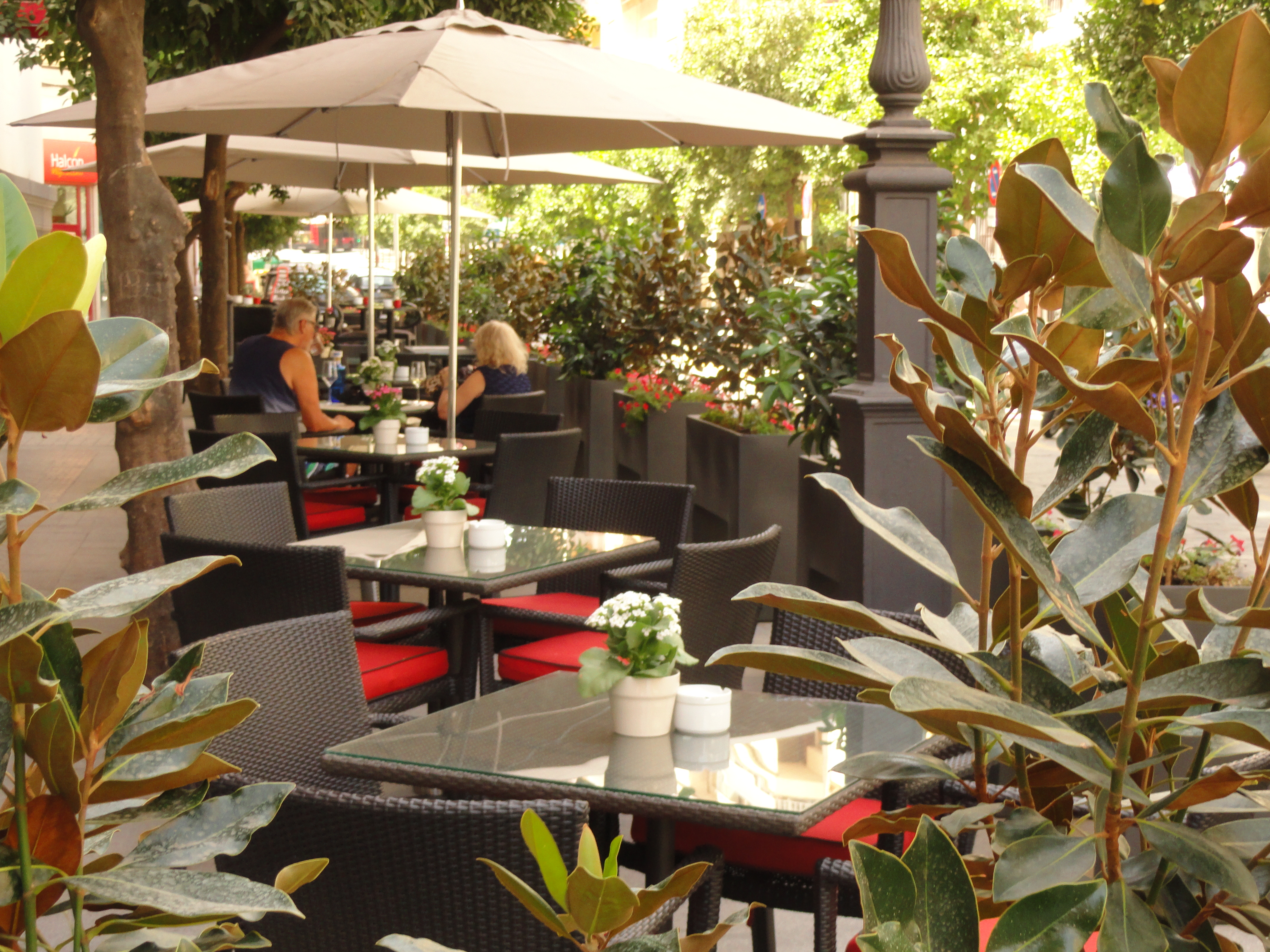
And the evening is a really nice time in Spain. As the heat of the day begins to disappear, people spill out onto the streets, bars and restaurants. The terraces fill up, children are still playing outside, families and friends meet for a stroll and the whole place seems to come alive again after the slower afternoon.
At this point you are probably thinking that daily life in Spain revolves around rest, eating, spending time with friends and family, eating some more and enjoying copious amounts of wine and coffee with your food, and you’d be correct.
Frankly, that is an absolutely wonderful outlook on life and is something that has influenced my own priorities more than I ever expected it to. Over the years I have adopted more and more of that rhythm for myself, putting far less importance on work for work’s sake and far more on actually living well, enjoying life and making time for the people and experiences that matter.
Food isn’t simply fuel squeezed inconveniently into the working day, a coffee isn’t always something grabbed in a paper cup while rushing somewhere else, and time spent sitting around a table talking to the people you care about isn’t considered time wasted. These things are part of the day itself. There is something deeply embedded in Spanish culture about making time for food, family, friends and simply enjoying life. You can see it in the long lunches, the sobremesa, the evening paseo, the packed terraces and the simple fact that sitting down together over food and drink is so often an event in itself rather than something that has to be fitted around everything else. And honestly, I think that is a lesson more people need to learn.
Eventually, usually around 2100 or 2200 and sometimes even later, it is time for the final meal of the day. Dinner is traditionally lighter than lunch, although ‘lighter’ is obviously relative after an afternoon spent eating tapas, and there is rarely the same sense of needing to eat quickly and get home. Like everything else, dinner is something to sit down, enjoy and take your time over.
Eventually, usually around 2100 or 2200 and sometimes even later, it is time for the final meal of the day. Dinner is traditionally lighter than lunch, although ‘lighter’ is obviously relative after an afternoon spent eating tapas, and there is rarely the same sense of needing to eat quickly and get home. Like everything else, dinner is something to sit down, enjoy and take your time over.
Of course, the day doesn’t necessarily end when dinner does. By the time many people back home are getting ready for bed, Spain can still feel like it is in full swing. Bars and terraces stay busy late into the night, particularly at weekends, and if you want to carry on, clubs often don’t really get going until well after midnight and can stay open until the early hours of the morning.
But unlike the party islands full of British tourists, binge drinking is not a thing in Spain. So enjoy, but don’t go mad.
All in all, the Spanish tend to draw the day out a little bit more. Things are done later, meals aren’t rushed, food and drink are enjoyed and savoured over a longer period, and time with friends and family isn’t something squeezed into whatever scraps of the day work leaves behind. There is a strong emphasis on the life part of a work/life balance, and the more time I’ve spent in Spain over the years, the more I’ve come to appreciate just how sensible that is.
What once felt like culture shock now feels like a rhythm of life worth embracing. Slow down a little. Take longer over lunch. Have another coffee. Spend an evening wandering the streets with no particular destination, stop for tapas because you feel like it and make time for the people around you. Work will still be there tomorrow.
It may take a little getting used to at first, but once you do, you might just find yourself falling in love with la buena vida too.

Michael Huxley
Michael Huxley is the founder of Bemused Backpacker, a travel writer, published author, international speaker and former nurse who has spent more than twenty-five years travelling independently through over 150 countries. He helps readers travel with more confidence, safety and perspective.
Spain
Discover the real Spain beyond the resorts, from extraordinary cities and regional cultures to wild landscapes, incredible food and unforgettable experiences.

The Seductive Soul Of Triana, Seville
Discover the seductive soul of Triana, where Seville’s flamenco heritage, tapas culture and irresistible local character come vividly to life.

The Quiet Magic Between Realejo And Centro Sagrario
Step away from Granada’s famous sights and discover the quiet streets, hidden corners and everyday magic between Realejo and Centro Sagrario.

What Are The Best Things To Do In Spain?
Discover the best things to do in Spain, combining the country’s unmissable highlights with extraordinary landscapes, cultural experiences and lesser-known adventures far beyond the usual tourist trail.

Losing My Fear Of Speaking Spanish
After returning to Seville, I finally discovered what it feels like to stop rehearsing Spanish and start actually speaking it.

2 responses to “Culture Shock In Spain: Living La Buena Vida”
We traveled in Spain for a month last year. I know of what you speak! The Spanish way took some getting used to, and I complained to my husband that I can’t eat dinner at 10:00 pm. Well, surprise, surprise, within a few days there I was having dinner at 9:00 pm or later, taking an after-dinner stroll around whichever city we were in, and maybe hitting a bar with snacks before wandering back to the hotel around midnight or 1:00 am. Luckily, I don’t require much more than coffee and a sweet for breakfast, but when my appetite woke up, we were mindful of siesta time when many desirable eating spots were closed down. One of my all-time favorite trips.
So relateable! Confusing at first but the way of life just sucks you in and forever changes you! I still have regular afternoon naps now!